

EngD | Alumni
sgsmuscis-pgp-doctoral-engd-alumni
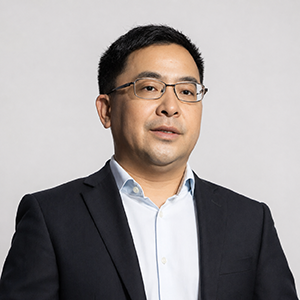
HUANG Donghao
VP R&D, Mastercard
IMDA SG Digital (Postgraduate) Scholar
Graduated EngD Student August 2023 intake
Dissertation Committee
-
Research Advisor:
- Prof MIAO Chunyan, Professor, College of Computing & Data Science, Nanyang Technological University
Co-Research Advisor:
Dissertation Committee Member(s):
External Member(s):
Dissertation Title
Generative AI in Enterprises: Optimizing Applications with Large Language Models
This dissertation investigates how to deploy Large Language Models (LLMs) effectively in enterprise settings, where accuracy, reliability, cost, privacy, and operational constraints often matter more than benchmark performance alone. Drawing on seventeen peer-reviewed publications, the work develops optimization strategies across three connected themes: retrieval-augmented generation (RAG), agentic AI for workflow automation, and deployment guidelines for real-world enterprise environments.
First, we optimize RAG by systematically evaluating open and proprietary models, and address a pervasive failure mode — output repetition — by introducing Repetition-Aware Performance (RAP), a metric that reduces repetition by up to 93.1% with only 3.7% performance degradation across models from 2B to 70B parameters.
Second, we develop multi-agent architectures for enterprise automation with reliability-centric evaluation. An invoice reconciliation system achieves 99.9% task success at 523 Joules per task; an LLM-as-a-Judge framework with the Evaluation Completion Rate (ECR@1) metric enables principled accuracy–reliability–cost trade-offs across a 175× pricing range. For payments, we design the first LLM-based agentic payment framework (HMASP) and introduce Agentic Success Rate (ASR) — a trajectory-level workflow fidelity metric that exposes systematic procedural deviations invisible to conventional metrics, with regulatory implications for PCI-DSS compliance.
Third, benchmarking across six hardware platforms and 504 model configurations reveals that reasoning effectiveness is strongly task- and family-dependent: reasoning degrades simple sentiment classification (up to −19.9 F1 pp) yet improves complex emotion recognition (up to +16.0 F1 pp). Open-weight models rival proprietary APIs at substantially lower cost.
Overall, this work shows that open-source LLMs, when optimized with reliability-aware metrics, can support privacy-preserving and cost-effective enterprise deployment.
Publications
Post EngD Candidature
Huang, D., Pei, J., Wang, Z. (2026). Curating Merchant-Matching Training Data with Two Confidence-Gated Local LLM Judges. 26th IEEE International Conference on Data Mining (ICDM-26).
During EngD Candidature
Huang, D. (2026). Generative AI in Enterprises: Optimizing Applications with Large Language Models. Doctor of Engineering (EngD) Dissertation, School of Computing and Information Systems, Singapore Management University.
Huang, D., Chua, J. K., & Wang, Z. (2026). Beyond Task Success: Measuring Workflow Fidelity in LLM-Based Agentic Payment Systems. Accepted for publication in Trends and Applications in Knowledge Discovery and Data Mining (PAKDD 2026 Workshops).
Huang, D., Pai, P., & Wang, Z. (2026). Entity Matching with LLMs at Scale: Accuracy, Cost, and Reasoning Effects. Accepted for publication in Trends and Applications in Knowledge Discovery and Data Mining (PAKDD 2026 Workshops).
Huang, D., Chew, S., & Wang, Z. (2026). CMAS4G2: A Locally Deployed Cooperative Multi-Agent System for Gherkin Acceptance Test Generation. Accepted for publication in Trends and Applications in Knowledge Discovery and Data Mining (PAKDD 2026 Workshops).
Huang, D., & Pandey, M. (2026). An Agentic Voice-Based Assistant for Interactive Conversation and Guidance in Real-World Environments. Accepted for publication in Demonstration Track, Proc. of the 25th International Conference on Autonomous Agents and Multiagent Systems (AAMAS 2026), Paphos, Cyprus, May 25–29, 2026.
Chua, J. K., Tse, C. H., Huang, D., & Wang, Z. (2026). ConvPayMAS: Conversational Payment Multi-Agent System with Agent-to-Agent Protocol and Three-Mandate Verification. Accepted for publication in Demonstration Track, Proc. of the 25th International Conference on Autonomous Agents and Multiagent Systems (AAMAS 2026), Paphos, Cyprus, May 25–29, 2026.
Huang, D., & Wang, Z. (2026). Task Complexity Matters: An Empirical Study of Reasoning in LLMs for Sentiment Analysis. Accepted for publication in The 30th Pacific-Asia Conference on Knowledge Discovery and Data Mining (PAKDD 2026).
Huang, D., Chua, J. & Wang, Z. (2026). A Novel Hierarchical Multi-Agent System for Payments Using LLMs. Accepted for publication in The 30th Pacific-Asia Conference on Knowledge Discovery and Data Mining (PAKDD 2026).
Huang, D., Malwe, G., & Wang, Z. (2026). When Agents Fail to Act: A Diagnostic Framework for Tool Invocation Reliability in Multi-Agent LLM Systems. Accepted for publication in 2026 The 9th International Conference on Artificial Intelligence and Big Data (ICAIBD 2026).
Huang, D., Chew S., Dutkiewicz A., & Wang, Z. (2026). LLM-as-a-Judge for Scalable Test Coverage Evaluation: Accuracy, Operational Reliability, and Cost. Accepted for publication in AAAI 2026 Workshop on Next-Gen Code Development with Collaborative AI Agents.
Huang, D., Teo, N., Chekuru, A., Deutschman, E., & Wang, Z. (2025). Deploying Reasoning LLMs for Sentiment Analysis: Architecture Trade-offs on Consumer Hardware. Accepted for publication in 2025 IEEE International Conference on Data Mining Workshops (ICDMW).
Samuel, S., Huang, D., Tan, J. & Wang, Z. (2025). Integrating LLM Sentiment Analysis into Machine Learning for Soccer Betting. Accepted for publication in 2025 IEEE International Conference on Data Mining Workshops (ICDMW).
Huang, D., & Wang, Z. (2025). Explainable Sentiment Analysis with DeepSeek-R1: Performance, Efficiency, and Few-Shot Learning. IEEE Intelligent Systems, doi: 10.1109/MIS.2025.3614967.
Huang, D., Ng, D., Pen, H., Wang, Z., & Cambria E. (2025). Evaluating the Impact of LLM-Manipulated Content on Fake News Detection. In: Yuan, S., Malliaros, F., Zheng, X. (eds) Trends and Applications in Knowledge Discovery and Data Mining. PAKDD 2025. Lecture Notes in Computer Science(), vol 15835. Springer, Singapore. https://doi.org/10.1007/978-981-96-8197-6_28
Teo, N., Huang, D., Cambria, E., Wang, Z. (2025). Large Language Models for Logical Fallacy Detection. In: Yuan, S., Malliaros, F., Zheng, X. (eds) Trends and Applications in Knowledge Discovery and Data Mining. PAKDD 2025. Lecture Notes in Computer Science(), vol 15835. Springer, Singapore. https://doi.org/10.1007/978-981-96-8197-6_29
Huang, D., & Wang, Z. (2025). LLMs at the Edge: Performance and Efficiency Evaluation with Ollama on Diverse Hardware. In 2025 International Joint Conference on Neural Networks (IJCNN). IEEE, 2025, pp. 1–8.
Huang, D., Nguyen, T. S., Liausvia, F., & Wang, Z. (2025, April). RAP: A Metric for Balancing Repetition and Performance in Open-Source Large Language Models. In Proceedings of the 2025 Conference of the Nations of the Americas Chapter of the Association for Computational Linguistics: Human Language Technologies (Volume 1: Long Papers) (pp. 1479-1496).
Huang, D., Malwe, G., Varshney, R., Tse, A., & Wang, Z. (2025, March). Scalable Invoice Reconciliation for SMEs: Edge-Deployed LLMs in Multi-Agent Systems. In 2025 International Conference on Data Science, Agents & Artificial Intelligence (ICDSAAI) (pp. 1-6). IEEE.
Huang, D. & Wang,Z. (2025). Optimizing Chinese-to-English Translation Using Large Language Models, 2025 IEEE Symposium on Computational Intelligence in Natural Language Processing and Social Media (CI-NLPSoMe), Trondheim, Norway, 2025, pp. 1-7, doi: 10.1109/CI-NLPSoMe64976.2025.10970768.
Huang, D. & Wang,Z. (2025). Logical Reasoning with LLMs via Few-Shot Prompting and Fine-Tuning: A Case Study on Turtle Soup Puzzles, 2025 IEEE Symposium on Computational Intelligence in Natural Language Processing and Social Media (CI-NLPSoMe Companion), Trondheim, Norway, 2025, pp. 1-5, doi: 10.1109/CI-NLPSoMeCompanion65206.2025.10977921.
Wang, Z., Huang, D., Cui, J. et al. (2025). A review of Chinese sentiment analysis: subjects, methods, and trends. Artif Intell Rev 58, 75 (2025).
Huang, D., Fu, X., Yin, X., Pen, H., & Wang, Z. (2024). Automating maritime risk data collection and identification leveraging large language models. In 2024 IEEE International Conference on Data Mining Workshops (ICDMW) (pp. 433–439). IEEE.
Huang, D., Hu, Z., & Wang, Z. (2024, June). Performance Analysis of Llama 2 Among Other LLMs. In 2024 IEEE Conference on Artificial Intelligence (CAI) (pp. 1081-1085). IEEE.
Huang, D., & Wang, Z. (2024, April). Evaluation of orca 2 against other llms for retrieval augmented generation. In: Wang, Z., Tan, C.W. (eds) Trends and Applications in Knowledge Discovery and Data Mining. PAKDD 2024. Lecture Notes in Computer Science(), vol 14658. Springer, Singapore. https://doi.org/10.1007/978-981-97-2650-9_1
Huang, D., Samuel, S., Hyunh, Q. T., & Wang, Z. (2024, April). From Tweets to Token Sales: Assessing ICO Success Through Social Media Sentiments. In: Wang, Z., Tan, C.W. (eds) Trends and Applications in Knowledge Discovery and Data Mining. PAKDD 2024. Lecture Notes in Computer Science(), vol 14658. Springer, Singapore. https://doi.org/10.1007/978-981-97-2650-9_5
Prior to EngD Candidature
Lin, W. B., Huang, D. H., Zhang, X., & Brandenberger, R. (2001). Nonthermal Production of Weakly Interacting Massive Particles and the Subgalactic Structure of the Universe. Physical Review Letters, 86(6), 954–957. https://doi.org/10.1103/PhysRevLett.86.954
Huang, D. H., Lin, W. B., & Zhang, X. M. (2000). Remark on approximation in the calculation of the primordial spectrum generated during inflation. Physical Review D, 62(8), 087302. https://doi.org/10.1103/PhysRevD.62.087302
Testimonial / Experience Commentary
Pursuing the EngD at SMU while leading global EmTech R&D at Mastercard has been the most demanding and rewarding chapter of my professional life. The programme sits at the intersection of academic rigour and industry practice, exactly the right fit for the questions I most wanted to answer: how do you actually deploy generative AI inside a regulated enterprise?
My supervisors, Associate Professor Zhaoxia Wang and Professor Chong Wah Ngo, gave me both the freedom to pursue an ambitious agenda and the discipline to publish it at venues including AAAI, AAMAS, NAACL, IJCNN, and PAKDD. The research did not stay on paper: the RAP metric is now the production output-quality gate in the Mastercard Assistant Platform, and the ASR metric is informing Mastercard’s agentic AI products.
I am deeply grateful to SMU, my dissertation committee, and IMDA Singapore Digital Scholarship that supported this work.

sgsmuscis-pgp-doctoral-engd-alumni
Dr JEYARAMAN Brindha Priyadarshini
Founder & CEO, Aethryx
Graduated EngD Student August 2021 intake
Dissertation Committee
-
Research Advisor:
- Professor WANG Jiwei, School of Accountancy, Singapore Management University
Co-Research Advisor:
External Examiner(s):
Dissertation Title
Temporal Relational Graph Convolutional Networks for Financial Applications
The financial industry operates in a highly dynamic and interconnected ecosystem, posing complex challenges for predictive modeling and decision-making. Accurately forecasting financial performance, detecting fraud, assessing credit risk, and ensuring compliance require techniques that can capture temporal, relational, and contextual dependencies in financial data. This dissertation explores the application of Temporal Relational Graph Convolutional Networks (TRGCNs) combined with Financial Knowledge Graphs (FKGs) to address these challenges and advance analytics in finance.
The study introduces FintechKG, a financial knowledge graph constructed through a three-dimensional information extraction pipeline encompassing entities, temporal features, and domain-specific financial relationships. The TRGCN-based framework models both temporal and relational dependencies within FintechKG, enhanced with FinBERT embeddings and social media signals for richer feature representation. Using a financial performance prediction case study, a logistic regression model is applied to classify revenue trends, demonstrating the efficacy of combining relational and textual embeddings.
In addition, the dissertation presents a novel Temporal Credit Knowledge Graph (TCKG) framework to support corporate credit risk assessment. This framework leverages temporal embeddings, relational reasoning, and generative AI techniques to predict credit risk with high accuracy. A comparative analysis involving five models—including logistic regression, Relational Graph Convolutional Networks (RGCNs), generative AI Gemini models, and Graph Recurrent Neural Networks (GRNNs)—highlights the superiority of the Gemini-based approach in terms of performance, robustness, and explainability.
By integrating temporal learning, knowledge graphs, and generative AI, this research contributes a transformative methodology to financial analytics. It sets the stage for future innovations that merge structured reasoning with generative intelligence, enhancing decision-making in complex and dynamic financial environments.
Publications
During EngD Candidature
Jeyaraman, B. P. (2025). Large language models ops for finance: A practical guide to infrastructure, implementation, and innovation. Springer. https://doi.org/10.1007/979-8-8688-1700-7
Jeyaraman, B.P., Dai, B.T., & Fang, Y. (2024). Temporal Relational Graph Convolutional Network Approach to Financial Performance Prediction. Mach. Learn. Knowl. Extr. 2024, 6, 2303-2320.
https://doi.org/10.3390/make6040113
Jeyaraman (2024) Observability in Finance: Achieving excellence in finance with effective observability
Observability in Finance: Achieving excellence in finance with effective observability (English Edition) : Priyadarshini Jeyaraman, Brindha: Amazon.sg: Books
Prior to EngD Candidature
Jeyaraman. (2022). Real-time streaming with Apache Kafka, Spark, and Storm : create platforms that can quickly crunch data and deliver real-time analytics to users. BPB Publications. https://search.library.smu.edu.sg/permalink/65SMU_INST/naremq/alma99465411302601
Jeyaraman, Olsen, L. R., & Wambugu, M. (2019). Practical Machine Learning with R: Define, Build, and Evaluate Machine Learning Models for Real-World Applications. Packt Publishing Limited. https://search.library.smu.edu.sg/permalink/65SMU_INST/1ba19kd/cdi_proquest_ebookcentral_EBC5889892
Commentary on Experience in the Programme
The EngD programme at SMU has been an intellectually transformative journey. It allowed me to blend academic rigor with real-world problem-solving across finance and AI. Working under esteemed faculty and collaborating with industry experts helped shape a research methodology that is not only robust but also highly applicable to modern financial systems.
What stood out most was the support structure and interdisciplinary nature of the programme, which encouraged exploration across machine learning, knowledge graphs, and generative AI. The journey culminated in developing a solution with potential real-world impact, and I am proud to carry forward these insights in my work leading AI initiatives at Google Cloud.
I am deeply grateful to the faculty, peers, and administrative team for their guidance and encouragement throughout this journey.
sgsmuscis-pgp-doctoral-engd-alumni
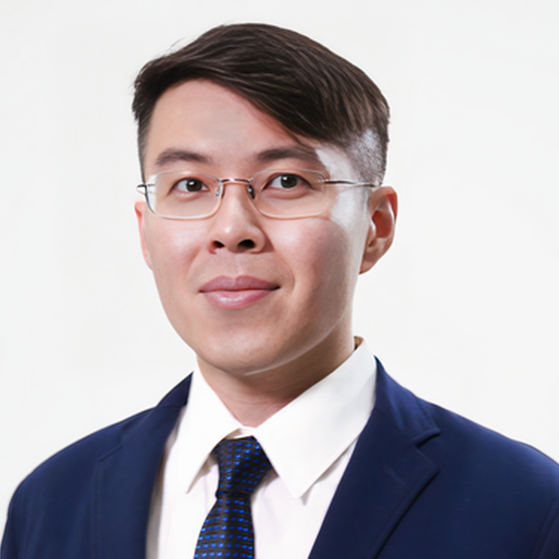
Dr TAN Ming Hui
Data Science Director, Procter & Gamble
Graduated EngD Student August 2020 intake
Dissertation Committee
-
Research Advisor:
- Professor CAO Kai, School of Geographic Sciences, East China Normal University
Co-Research Advisor:
External Examiner(s):
Dissertation Title
A data-driven framework for optimal retail store location
This study develops a data-driven framework for optimal retail store location planning that integrates road network analysis, mobility data and optimization techniques. By addressing the limitations of traditional approaches that rely on outdated census data and manual site selection, this research offers a scalable and adaptable solution for retail expansion in diverse urban environments.
The research establishes foundational context through comprehensive literature review, identifying significant gaps in community identification methods, store footfall prediction techniques and competitive facility location models. The framework proposes a three-stage spatial partitioning procedure that partitions road networks using the Louvain method, outlines partition boundaries using Uber H3 grids, and classifies partitions through K-means clustering. Experimental results in Da Nang, Vietnam demonstrate the method's effectiveness in organizing large-scale road networks into distinct communities.
The study explores footfall estimation augmentation through mobility data integration, creating population-weighted centroids that enhance the traditional Huff Model commonly used in site selection. This approach harnesses big data's potential, offering a cost-effective and scalable alternative that eliminates reliance on outdated census data and government urban planning records. The methodology employs the Adaptive Large Neighborhood Search (ALNS) algorithm to automate facility allocation across large urban search spaces, achieving near-optimal solutions without exhaustive evaluation of solution spaces.
The integrated framework combines community detection, enhanced Huff Model and ALNS optimization into a cohesive, data-driven approach. This research contributes methodological innovations to academic literature while offering practical solutions to retail expansion challenges, enabling more efficient, accurate and scalable decisions that adapt to diverse urban contexts.
Publications
During EngD Candidature
Tan, M.H., Tan, K.W., & Lau, H.C. (2024). A Data-Driven Approach for Automated Multi-Site Competitive Facility Location, IEEE Big Data 2024
Tan, M.H., Tan, K.W. & Lau H.C (2023). A Big Data Approach to Augmenting the Huff Model with Road Network and Mobility Data for Store Footfall Prediction, IEEE International Conference on Big Data 2023.
Tan, M.H., & Tan, K.W. (2022). Data-driven retail decision-making using spatial partitioning and delineation of communities. PACIS 2022 Proceedings, 117, 1–15. https://ink.library.smu.edu.sg/sis_research/7199/
Commentary on Experience in the Programme
The EngD programme at SMU has been a profoundly enriching journey that seamlessly bridged academic rigor with practical industry applications. What distinguished this experience was the exceptional mentorship from my professors, who provided not just technical guidance but also strategic insights that shaped my approach to complex data science challenges. Their close supervision and collaborative spirit created an environment where innovative thinking flourished. The programme's structure encouraged me to tackle real-world problems with academic depth, culminating in a framework that addresses genuine business challenges in retail location planning. This blend of theoretical foundation and practical application has been invaluable in my current role leading data science initiatives at Procter & Gamble.
sgsmuscis-pgp-doctoral-engd-alumni
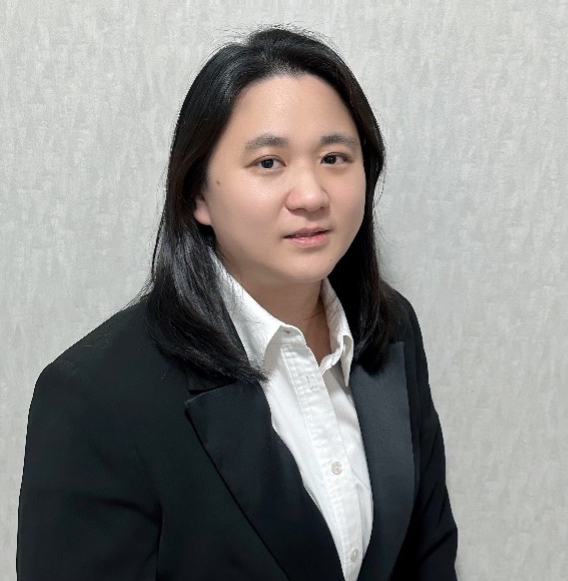
Dr Tristan LIM Ming Soon
Head of Programme (Business & Technology Cluster), SUSS Academy
Graduated EngD Student August 2021 intake
Dissertation Committee
-
Research Advisor:
- Assistant Professor Soujanya Poria, Singapore University of Technology & Design
Co-Research Advisor:
Dissertation Committee Member(s):
External Examiner(s):
Dissertation Title
Ethical Imperatives in AI-Driven Educational Assessment: Framework and Implications.
This dissertation looks into the ethical challenges of integrating AI into education, revealing a significant gap in the literature concerning AI's ethical imperatives in educational assessments. It aims to understand the technologies behind assessments, clarify the relationship between AI, ethics, and assessments, and develop a framework for addressing AI's ethical challenges in this setting. The research contributes a detailed examination of AI's role and its ethical consequences in educational assessments, presenting a framework to aid stakeholders to address these complexities. It also calls for further interdisciplinary research and responsible AI application to enhance educational practices ethically and effectively.
Publications
During EngD Candidature
Lim, Tristan; Gottipati, Swapna & Cheong, Michelle (in press). Educational Technologies and Assessment Practices: Evolution and Emerging Research Gaps. In Braman, J., Brown, A. & Richards, M. J. (Ed.), Reshaping Learning with Next Generation Educational Technologies. IGI Global. DOI: https://doi.org/10.4018/979-8-3693-1310-7. [Book Chapter].
Lim, Tristan; Gottipati, Swapna; Cheong, Michelle; Ng, Jun Wei & Pang, Chris. (2023). Analytics-enabled Authentic Assessment Design Approach for Digital Education. Education and Information Technologies. Springer Nature. DOI: https://doi.org/10.1007/s10639-022-11525-3. [Tier 1. H5-Index 91; Scopus Q1; Google Metrics Educational Technology Category Ranked #2, Education Category Ranked #1].
Lim, Tristan; Gottipati, Swapna & Cheong, Michelle (2023). Ethical Considerations for Artificial Intelligence in Educational Assessments. In Keengwe, S. (Ed.), Creative AI Tools and Ethical Implications in Teaching and Learning. IGI Global. DOI: https://doi.org/10.4018/979-8-3693-0205-7. [Book Chapter].
Lim, Tristan; Gottipati, Swapna & Cheong, Michelle (2022). Authentic Assessments for Digital Education: Learning Technologies Shaping Assessment Practices. Proceedings of the 30th International Conference on Computers in Education (ICCE 2022). 1, p. 587-592. Kuala Lumpur, Malaysia. ISBN: 978-986-972-149-3.
Lim, Tristan; Gottipati, Swapna; Cheong, Michelle; Ng, Jun Wei & Pang, Chris. (2022). Assessment Design for Digital Education: An Analytics-based Authentic Assessment Approach. 2022 IEEE International Conference on Teaching, Assessment and Learning for Engineering (TALE), Hong Kong.
Commentary on Experience in the Programme
The Doctor of Engineering program at SMU is distinguished by its exemplary supervision and robust support systems. My thesis supervisors, Prof. Swapna Gottipati, Prof. Michelle Cheong and Prof. David Lo, provided invaluable guidance, instrumental in both my academic and professional growth. The diverse expertise of the thesis committee members enriched research and professional perspectives, fostering an environment where I felt both challenged and supported both as an academic and industry practitioner.
Additionally, commendations to the diligent logistical and procedural support from the academic administrative staff, in particular Ms. Yeo Lip Pin and Ms. Diana Koh, who were instrumental in streamlining procedural requirements and minimizing administrative hurdles for EngD students.
I am profoundly grateful for the mentorship and resources that have been pivotal to my education in SMU. This intellectually stimulating programme effectively combines rigorous academic training with comprehensive support, preparing students for impactful careers in their fields.
sgsmuscis-pgp-doctoral-engd-alumni
Dr LEE Hui Shan
Senior Product Manager, GovTech Singapore
Graduated EngD Student August 2020 intake
Dissertation Committee
-
Research Advisor:
- Professor Blooma John, University of Canberra
Co-Research Advisor:
Dissertation Committee Member(s):
External Examiner(s):
Dissertation Title
Implementation and Evaluation of AI-Based Citizen Question-Answer Recommender (ACQAR) To Enhance Citizen Service Delivery In Singapore Public Sector: A Case Study
Government agencies prioritize citizen service delivery to foster trust with the public. Technological advancements, particularly in Artificial Intelligence (AI), hold promise for improving service provision and aligning government operations with citizens' needs. This dissertation contributes a framework for the development of an AI-enabled recommender system known as AI Based Citizen Question-Answer Recommender (ACQAR). Further research was done with the implementation of this system within a Singaporean government agency to enhance the agency’s citizen service delivery. ACQAR integrates Empath X SLA predictor, Citizen Question-Answer system (CQAS), and ChatGPT to generate contextually aware responses for customer service officers. The study aims to optimize government-citizen interactions in the digital age, where citizens expect efficient, personalized, and empathetic services.
Publications
During EngD Candidature
Alvina Lee Hui Shan & Ouh, Eng Lieh & Shankararaman, Venky. (2024). Enhancing citizen service management through AI-enabled systems – a proposed AI readiness framework for the public sector. 10.4337/9781802207347.00014. [Book Chapter]
Alvina Lee Hui Shan, Venky Shankararaman, and Eng Lieh Ouh (2024). Enhancing Government Service Delivery: A Case Study of ACQAR Implementation and Lessons Learned from ChatGPT Integration in a Singapore Government Agency. In Proceedings of the 25th Annual International Conference on Digital Government Research (dg.o '24). Association for Computing Machinery, New York, NY, USA, 645–653. [ICORE Rank B Conference]
Alvina Lee Hui Shan, Venky Shankararaman and Eng Lieh Ouh (2023). Learnings from Implementing a Pilot Hybrid Question Answering System for a Government Agency in Singapore, Hawaii International Conference on system Sciences (HICSS) [ICORE Rank A Conference]
Alvina Lee Hui Shan, Venky Shankararaman and Eng Lieh Ouh (2023). Vision Paper: Advancing of AI Explainability for the use of ChatGPT in Government Agencies – Proposal of A 4-Steps Framework. IEEE International Conference on Big Data 2023 [ICORE Rank B Conference]
Alvina Lee Hui Shan, Venky Shankararaman and Eng Lieh Ouh (2023). Extending the Horizon by Empowering Government Customer Service Officers with ACQAR for Enhanced Citizen Service Delivery. IEEE International Conference on Big Data 2023 [ICORE Rank B Conference]
Alvina Lee Hui Shan, Venky Shankararaman and Eng Lieh Ouh (2022). Implementation of Empath X SLA predictive tool for a Government Agency, IEEE International Conference on Big Data 2022 [ICORE Rank B Conference]
Alvina Lee Hui Shan, Venky Shankararaman and Eng Lieh Ouh (2022). Poster: Learnings from a Pilot Hybrid Question Answering System: CQAS, DG.O'22: DG.O2022: The 23rd Annual International Conference on Digital Government Research [ICORE Rank B Conference]
Commentary on Experience in the Programme
The Doctor of Engineering program (EngD) at Singapore Management University serves as a bridge between industry practices and academic rigor. It fosters and elevates my knowledge and skills in practical implementation within my current work domain, furthering my passion in utilizing Artificial Intelligence and Technology to serve the citizens of Singapore. This program is an ideal choice for those seeking a practical yet academically rigorous learning experience to further their career.
Deepest gratitude goes to the esteemed supervisory committee members, Vice Provost (Education) Venky Shankararaman, Associate Professor (Education) Ouh Eng Lieh, and Associate Professor Hady Wirawan Lauw. Their boundless patience, unwavering guidance, and steadfast support have been the guiding light of the EngD journey. Professor Michelle Cheong and the EngD administration office also deserve heartfelt appreciation for their endless patience and assistance in navigating logistical hurdles and coordinating conference funding arrangements, allowing for full immersion in research endeavors.
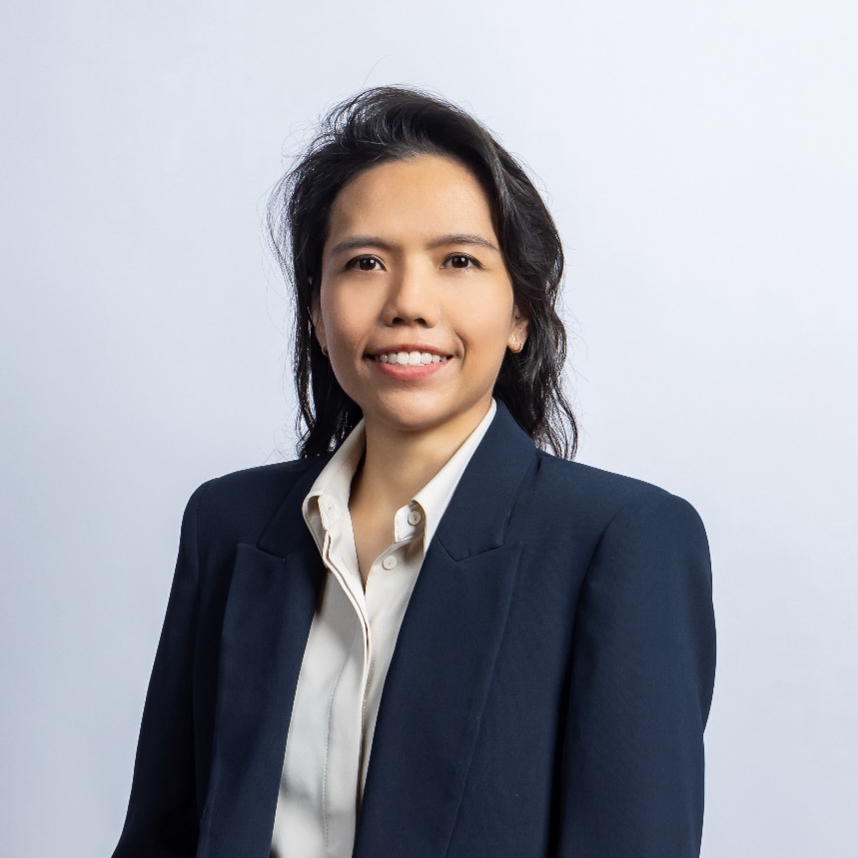
sgsmuscis-pgp-doctoral-engd-alumni
Dr Nurul Asyikeen Binte AZHAR
Chief Technology Officer, KLAR.ai
Economic Development Board Industrial Postgraduate Programme (EDB IPP) Scholar
Graduated EngD Student August 2020 intake
Dissertation Committee
-
Research Advisor:
- Dr Erwin LEONARDI (RT)
- Professor Mark Goh, National University of Singapore
Co-Research Advisor:
Industry Co-Supervisor(s):
External Examiner(s):
Dissertation Title
The precedence-constrained production scheduling problem (PCPSP) in Long-Term Mine Planning is acknowledged to be NP-hard and conventionally prioritizes the Net Present Value (NPV) of profits. Even so, heightened sustainability concerns necessitate heightened sustainable practices. Yet, research still lags. Hence, we tackled how sustainability elements can be incorporated into the PCPSP, focusing on environmental sustainability of carbon dioxide emissions (or carbon costs).
To begin, our systematic review examined the techniques for the PCPSP for commonalities, trends and sustainability inclusion. We then assessed two Multi-Objective Optimization (MOO) approaches to trade off the NPV of profits against carbon costs -- decomposition-based and domination-based. Under the decomposition-based approach, we used a bounded objective function method and proposed the novel hybrid Temporally Decomposed Greedy Lagrangian Relaxation (TDGLR) algorithm. Next, the domination-based approach compared two popular Multi-Objective Evolutionary Algorithms (MOEAs) of Non-dominated Sorting Genetic Algorithm II and Pareto-Envelope Based Selection Algorithm II using novel heuristics within them. Lastly, we put forth a framework to assess uncertainty within a dual MOEA setup. Overall, our research provides future direction when trading off sustainability elements and incorporating uncertainties for this real-world problem.
Publications
During EngD Candidature
Nurul Asyikeen Azhar, Aldy Gunawan, Cheng Shih-Fen, Erwin Leonardi (2024). Comparison of Evolutionary Algorithms: A Case Study on the Multi-Objective Carbon-Aware Mine Planning. IEEE International Conference on Automation Science and Engineering.
Nurul Asyikeen Azhar, Aldy Gunawan, Cheng Shih-Fen, Erwin Leonardi (2024). Long-Term Mine Planning: a Survey of Classical, Hybrid and Artificial Intelligence Based Methods. Asia Pacific Journal of Operational Research, Special Edition. https://www.worldscientific.com/doi/abs/10.1142/S0217595924400141
Nurul Asyikeen Azhar, Aldy Gunawan, Cheng Shih-Fen, Erwin Leonardi (2023). Carbon-Aware Mine Planning with a Novel Multi-Objective Framework. International Conference on Computational Logistics 2023. https://link.springer.com/chapter/10.1007/978-3-031-43612-3_31
Nurul Asyikeen Azhar, Aldy Gunawan, Cheng Shih-Fen, Erwin Leonardi (2022). A Carbon-Aware Planning Framework for Production Scheduling in Mining. International Conference on Computational Logistics 2022. https://link.springer.com/chapter/10.1007/978-3-031-16579-5_30
Commentary on Experience in the Programme
The programme was a good bridge between industry and academia whereby research was focused on real-world problems. It instilled the rigour, depth and inquisition that can be applied to and elevate my work as a Data Scientist. The programme also allowed me to connect with other researchers locally and globally so as to expand and exchange ideas.