
ACE Learning Trip to Shenzhen, China
This story is written by KOH Sheng Wei and Reg SIM Yu Jian, 2023 Intake
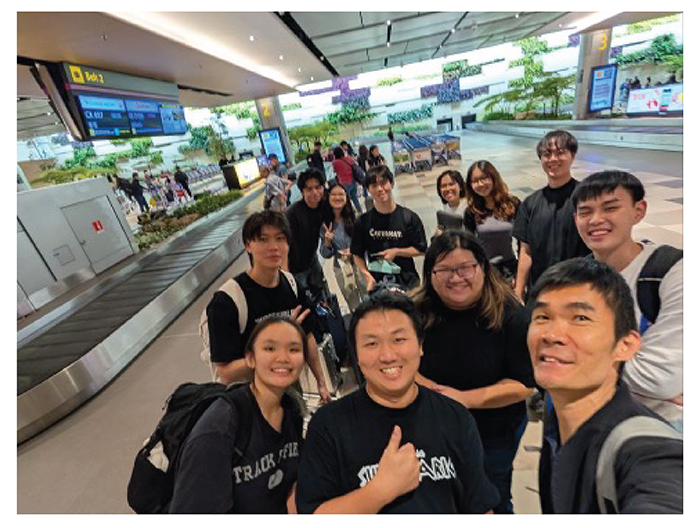
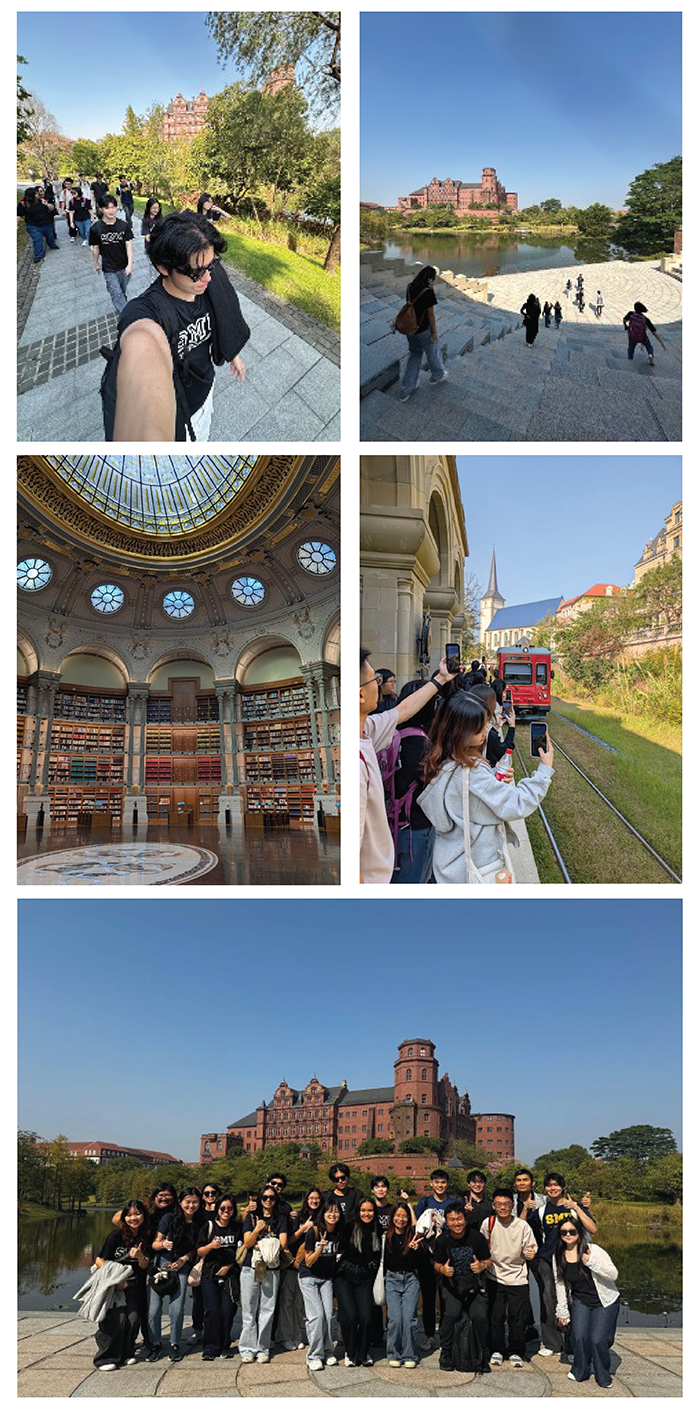
From 6–13 December 2025, 18 students embarked on the ACE learning journey to Shenzhen, China with a mix of curiosity and excitement. The trip offered a unique opportunity to learn about the Chinese city’s innovation and technology landscape, as well as its vibrant startup culture. For many of us, this was our first time visiting Shenzhen, making the experience both eye-opening and memorable as we explored a new city and gained fresh perspectives beyond the classroom.
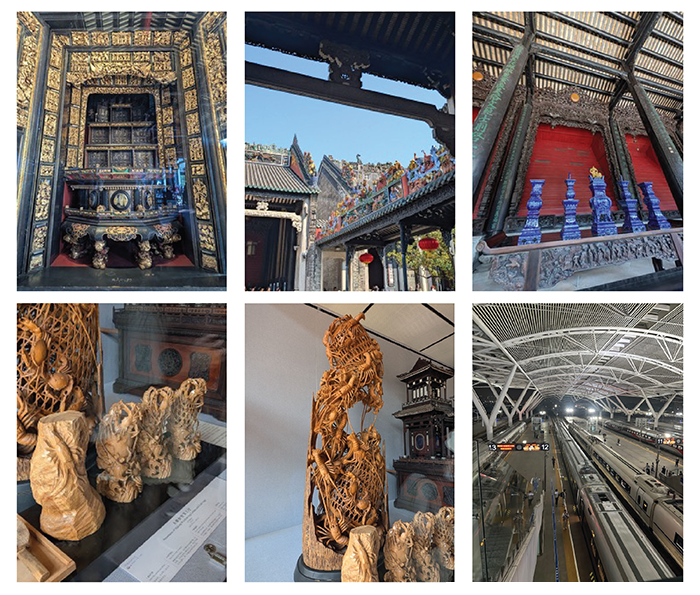
Our first stop on the trip was a short side trip to Guangzhou, in the Guangdong province, where we visited the Chen Clan Ancestral Hall. Walking through the intricately carved halls and courtyards, we were immediately struck by the magnificent golden shrine that dominated the main hall, its gilded surfaces catching the light and reflecting centuries of craftsmanship. We learned about traditional Cantonese architecture, clan culture, and the role such ancestral halls played in community life. The detailed wood, stone, and ceramic carvings gave us a deeper appreciation of the craftsmanship and values that have been passed down through generations. What fascinated us most was discovering the subtle Western influences woven into traditional design, a testament to Guangzhou’s historical role as a trading port where East meets West.
For our next office visit, we visited SoBanHang, a technology startup which was initially developing a product to digitalise the bookkeeping process for small businesses in Vietnam. However, we learnt that due to the COVID-19 pandemic, they held a 2-week hackathon to create an MVP, and pivoted their original idea away to instead address the issues of helping physical stores in Vietnam create an online presence and managing their sales channel. We also learnt about their go-to market strategy, as well as discussed their freemium pricing strategy to attract businesses to use their platform. We also met up with Yao Wee, an SCIS alumni, who had kindly shared with us his experiences in SMU as well as in CMU, and also his working experiences post-graduation, which spanned across the United States, Singapore as well as here in Vietnam.
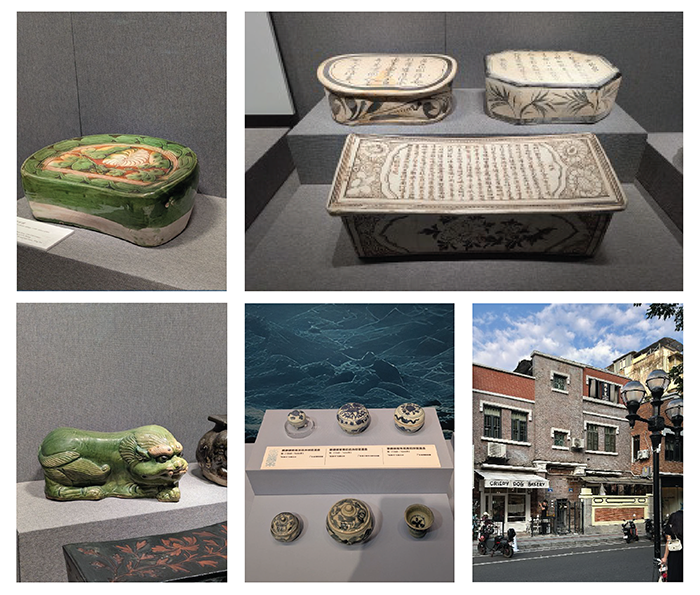
We then visited the Mausoleum Museum of the Nanyue King, where history came alive through well-preserved artefacts and exhibits from the ancient Nanyue Kingdom. We were fascinated to learn about the excavation process and the remarkable discoveries within the tomb that revealed the extensive trade networks and advanced civilisation of ancient times. The museum also showcased artefacts from later periods, including a stunning Jingdezhen kiln blue and white floral pattern porcelain covered box from the Ming Dynasty, recovered from the Nan'ao shipwreck. This discovery demonstrated the continued importance of maritime trade and the export of fine Chinese porcelain across centuries. We were particularly captivated by the remarkable ceramic pieces, including intricately designed ceramic pillows that were used by nobility, showcasing the advanced craftsmanship of the era. The beautiful green glaze technique used on many of the ceramics has remained vibrant after more than two millennia. The museum offered valuable insights into early Chinese civilisation, burial customs, and political history, helping us better understand how the past has shaped the region today. Together, these visits allowed us to connect with China's rich cultural and historical heritage, setting a meaningful foundation for the rest of our journey.
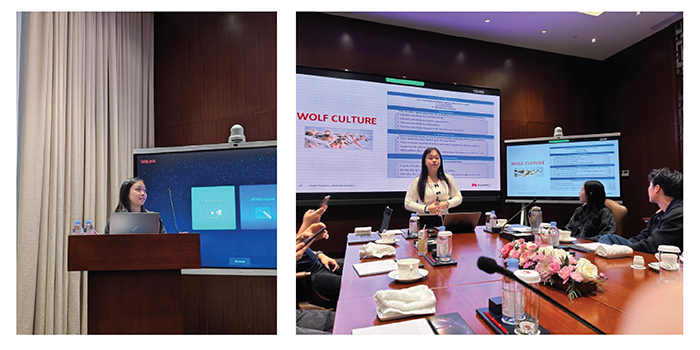
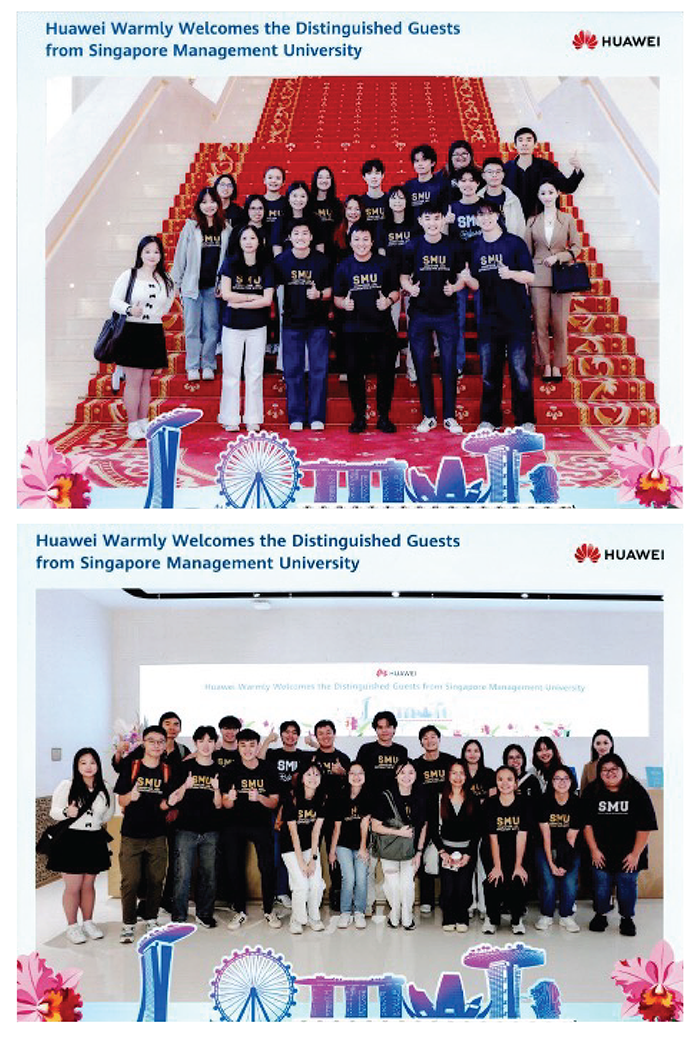
Our Day 1 office visits started with a trip to Huawei's Shenzhen Bantian Headquarters, where we gained valuable insights into both the company's impact and its technologies. We learned about Huawei's presence in Singapore, including a highly localised workforce and contributions to projects such as Changi Airport Terminal 5 and HDB smart camera systems, as well as its internal "Wolf Culture" that emphasises sharp intuition, strong teamwork, and perseverance. Students also took turns to share more about Singapore, SMU, and their experiences in SCIS, fostering a meaningful cultural exchange and allowing our hosts to better understand our academic journey and perspective.
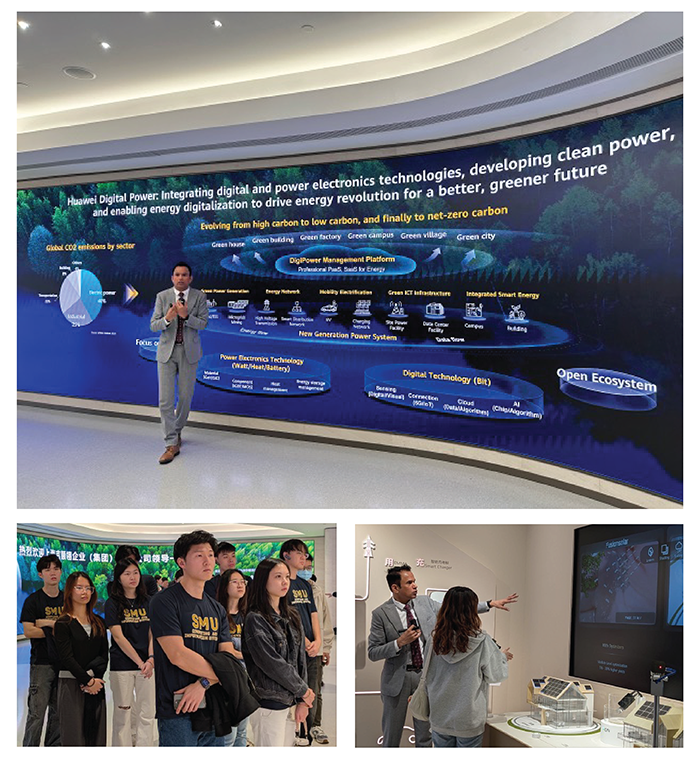
Through presentations and exhibitions, we were introduced to Huawei’s AI stack and its strong investment in research and development, especially in clean and green energy. We gained a clearer understanding of the end-to-end clean energy pipeline and how these solutions have been applied on the industrial, commercial and residential levels globally, including in places like Zimbabwe. At the Von Neumann Exhibition Hall, we also saw how Huawei supports public services in areas such as education, transport, and urban infrastructure.
On the second day, we visited the Huawei Ox Horn Campus, famously known as the European Town. Located in Dongguan, this massive Research & Development centre feels worlds away from a typical tech park. Spanning approximately 120 hectares (296-300 acres) and costing around 10 billion yuan (approximately 1.5 billion US dollars) to construct, the sheer scale and investment in this facility left us awestruck. We travelled through the campus on its dedicated electric rail system, a winding train route that connects twelve distinct zones, each modelled after a famous European city such as Paris, Bruges, and Granada.
Seeing the stunning replicas of castles and plazas was surreal, but it also highlighted the sheer scale of Huawei’s operations. It was fascinating to see how a global tech giant has invested in creating an inspiring, campus-style environment to attract top talent and foster creativity among its R&D workforce.
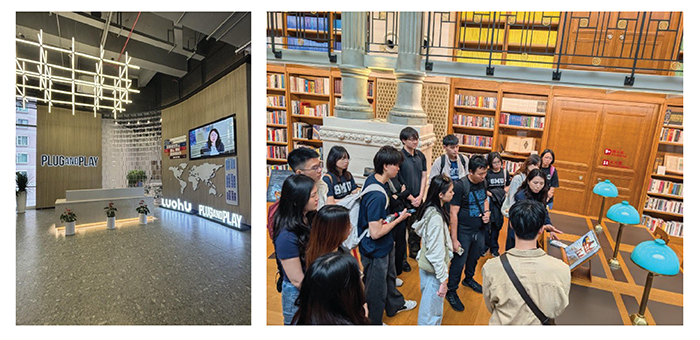
Following our visit to the European Town, we shifted gears to explore the startup side of the ecosystem at Plug and Play China. As a global innovation platform known for early investments in companies like Google and PayPal, their Shenzhen hub plays a crucial role as a 'super-connector' in the Greater Bay Area. We learned how they bridge the gap between early-stage startups and massive corporate partners, facilitating cross-border innovation that helps international tech enter China and local innovations go global. It was fascinating to see how they curate a network that fuels the rapid growth we see throughout the city.
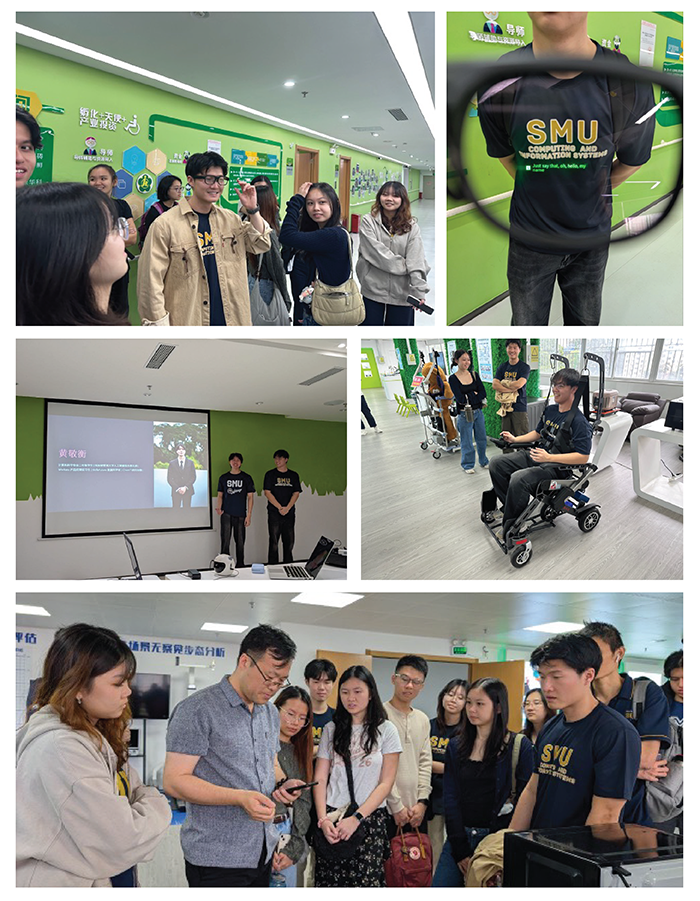
Day 3 focused on innovation with a strong social mission. We visited the Shenzhen Accessibility Innovation Incubation Space (深圳市无障碍孵化空间), where we saw how technology can empower persons with disabilities. Operating as a social enterprise, the space combines innovation with public good and showcases solutions for the blind, deaf, and those with mobility challenges. Highlights included smart glasses that help deaf individuals communicate and eye-tracking systems that allow users with limited mobility to select options on a screen independently. We also learned from Zhiyin (知音), a company committed to accessible technology. Their presentation covered their founding motivation and “accessibility” mission, the ecosystem role of the Zhiyin system, deep dives into their AI core technologies, and the integration of AR glasses with hardware solutions. They also shared insights into technology entrepreneurship and global expansion, demonstrating how accessibility-focused innovation can scale internationally.
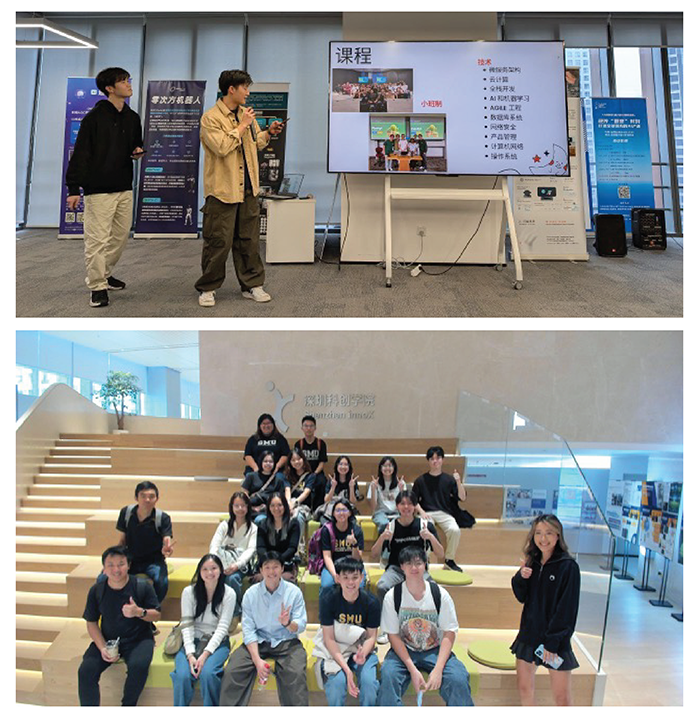
Later, we visited the Shenzhen Foundation Model AI Ecosystem Hub, an incubator for AI-related startups. Beyond providing office space, the hub fosters collaboration by giving startups platforms to interact, share ideas, and grow together. It was inspiring to see so many founders and team members in their early 30s, reflecting the energy and ambition of Shenzhen’s startup ecosystem.
On Day 4, we visited Kante Biotech, an innovative company dedicated to the precision diagnosis and early screening of malignant tumors. This visit provided a fascinating look at the intersection of biotechnology and artificial intelligence. We learned about their breakthrough work in detecting 'silent' killers like pancreatic cancer through non-invasive screening kits. It was compelling to see how they apply AI not just for data analysis, but for life-saving health management, reinforcing the trip’s recurring theme of technology serving a profound social purpose. Continuing our exploration of the hardware ecosystem, we visited the Shenzhen InnoX Academy. Founded by Professor Li Zexiang—a key figure behind the success of DJI—InnoX is not a traditional school but a launchpad for 'hard tech' entrepreneurs. We toured their makerspaces and saw how they disrupt traditional engineering education by focusing on project-based learning and rapid prototyping. It was inspiring to see students and young founders working on tangible robotics and smart hardware solutions, embodying the 'can-do' spirit of Shenzhen’s maker culture.
Our final stop for the day was EcoFlow, a unicorn startup that has revolutionized portable energy. Known for their industry-leading portable power stations and solar technology, EcoFlow offered us a look into the future of mobile green energy. We learned about their rapid ascent from a crowdfunding success to a global brand, and how their products are providing energy independence for everything from outdoor camping to emergency disaster relief. Seeing their sleek, user-centric designs up close highlighted how Shenzhen startups are successfully combining heavy-duty engineering with consumer-friendly aesthetics.
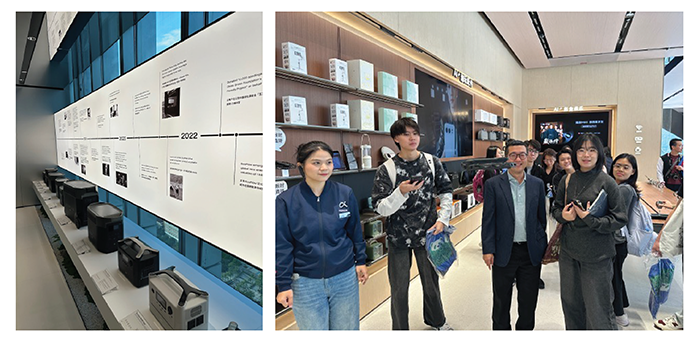
Day 5 of the trip focused on exploring leading tech companies in Shenzhen. Our first visit was to Honor, where we learned about their wide range of consumer devices, including smartphones, smartwatches, and other electronics, as well as their ongoing AI innovations that enhance user experiences across their products.
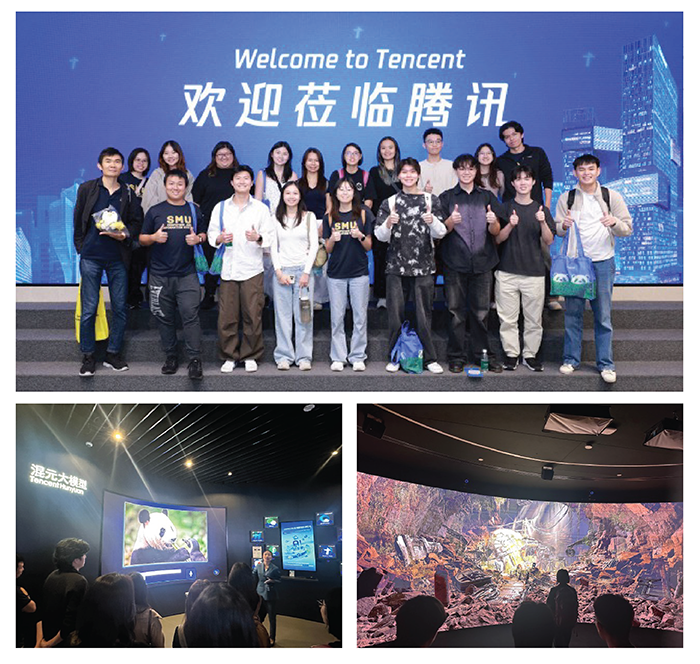
We then visited Tencent, established in 1998 and known for platforms like QQ, Tencent Cloud, Delta Force, Hunyuan, and WeTV. Tencent shared their focus on low-carbon initiatives, ensuring that many of their solutions and products include environmental considerations. Their philosophy of “tech for good” emphasizes creating value for users while benefiting society. We also learned about how Tencent integrates AI innovations across their systems, such as using AI for data analysis, user experience optimization, and enhancing platform security, giving us a deeper understanding of how advanced technologies drive both functionality and social impact.