| |
 Diffusion-Enhanced GFlowNet for Solving Vehicle Routing Problems Speaker (s):
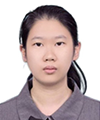
ZHANG Ni
PhD Student
School of Computing and Information Systems
Singapore Management University
| | Date: | 26 November 2026, Thursday | | Time: | 4:00pm – 4:15pm | | Venue: | Meeting room 4.4, Level 4.
School of Computing and
Information Systems 1,
Singapore Management University,
80 Stamford Road,
Singapore 178902 | | | Please register by 24 November 2026. |  |
|
About the Talk Traditional neural solvers for solving vehicle routing problems (VRPs) often suffer from limited solution diversity, motivating the development of Generative Flow Network (GFlowNet)–based models. However, the effectiveness of these models is frequently constrained by insufficient flow expansion in high-reward regions, limiting their ability to distribute probability across promising solution routes. The deeper exploration could yield superior results. Diffusion models, in contrast, provide stronger structural guidance for exploration. These two paradigms are naturally complementary: GFlowNet can supply edge-level signals for diffusion to embed, while diffusion can guide broader exploration. Leveraging this synergy, we propose Diffusion-Enhanced GFlowNet (DEG), a novel framework that integrates GFlowNet with a diffusion model to encourage richer flow expansion toward high-reward regions and derive higher-quality solutions. Specifically, DEG exploits GFlowNet’s inherent diversity to generate edge-specific backward signals, applies the stochastic noise schedule of diffusion to perturb these signals, and then denoises them within the GFlowNet paradigm. To further improve scalability, we introduce a specialized decoder capable of dynamically adapting to diverse problem scales. Extensive experimental evaluations on synthetic and real-world datasets, including instances with up to 10,000 nodes, demonstrate that DEG consistently achieves favorable performance compared to baseline methods. The code is available at https://github.com/ZHANG-NI/DEG.
This is a Pre-Conference talk for The Fortieth Annual Conference on Neural Information Processing Systems (NeurIPS 2026). About the speaker Ni ZHANG is a PhD student in Computer Science at the School of Computing and Information Systems, Singapore Management University, advised by Professor Zhiguang CAO. Her research focuses on neural combinatorial optimization, particularly learning-based methods for solving vehicle routing problems and other combinatorial optimization problems. Her work explores generative models, reinforcement learning, and large language models to develop efficient and scalable optimization algorithms. |