
Overview
This symposium brings together two leading voices in artificial intelligence to explore the evolving landscape of trustworthy and transformative AI. As language models and intelligent systems become increasingly integrated into our daily lives, the need for ethical, transparent, and impactful AI has never been greater.
Through two compelling talks—one focused on the ethical foundations of AI and the other on its transformative potential in research and society—we aim to gain a deeper understanding of how responsible AI can shape a smarter, fairer future. This event is designed for academics, professionals, and the public alike, offering insights into both the promises and responsibilities of next-generation AI.
Join us for an inspiring session on the future of artificial intelligence. Discover how trust, ethics, and innovation are shaping the next generation of intelligent systems — and what it means for research, industry, and society.
10:00 a.m. – 10:05 a.m.
Welcome remarks by SMU Provost, Prof Alan CHAN

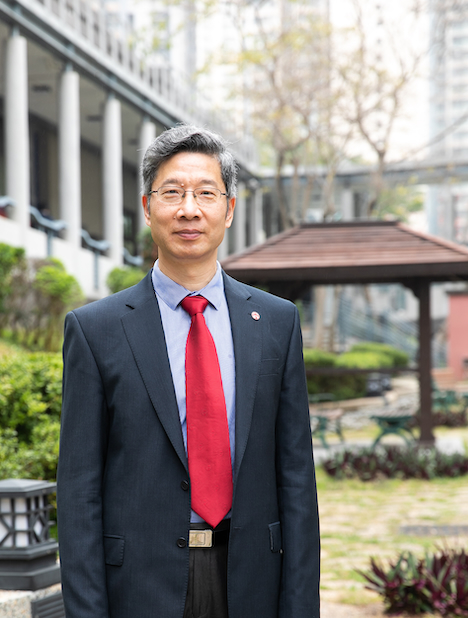
Trustworthiness is a critical issue in artificial intelligence (AI), especially for real-world applications. It is impossible to deloy AI in the real world without its being trustworthy. However, the connotation and extension of AI trustworthiness are not entirely clear. There has not been a single definition that is accepted by all researchers. Nevertheless, the vast majority of researchers agree that AI trustworthiness should include at least accuracy, reliability, robustness, safety, security, privacy, fairness, transparency, controllability, maintainability, etc. This talk starts from a brief recall of trustworthy systems in the literature. It tries to understand any potential difference between classical trustworthy systems and modern-day trustworthy AI. It argues that AI ethics is a crucial part of trustworthy AI, which was not featured in classical trustworthy systems. The talk then presents a short summary of AI ethics, and dives a little deeper into the fairness and explainability issues of machine learning models. It demonstrates that many aspects of AI ethics, such as fairness and explainability, are inherently multi-dimensional, which cannot be defined completely and accurately by any single metrics. Multi-objective thinking is essential in AI ethics. While a weighted sum approach can convert a multi-objective problem into a single objective one, this talk offers an alternative and illustrates how multi-objective evolutionary learning can be used to enhance fairness and explainability of machine learning models.
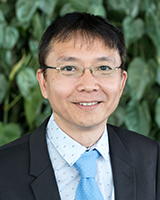
Artificial intelligence is reshaping how we explore ideas, understand information, and make decisions. This talk examines how AI language models are transforming research and data analysis—accelerating insight discovery, lowering barriers to working with complex information, and expanding access to knowledge across disciplines and backgrounds. We shall reflect on how this shift is opening new possibilities in learning, creativity, and collaboration, while also considering the challenges, limitations, and responsibilities that accompany the growing use of AI. Whether you are a researcher, professional, educator, or lifelong learner, this session hopes to offer a fresh perspective on the evolving role of AI in how we learn, think, and discover.
Panel Session
About the Speakers
Venue & Registration

Ngee Ann Kongsi Auditorium
Singapore Management University
School of Accountancy
60 Stamford Road, Singapore 178900
Registration closes on 15 April 2026, Wednesday, 11:59 pm
When you attend this event, you enter an area where photography and video recording may occur.
By registering for this conference, you consent to the collection, use and disclosure by Singapore Management University (“SMU”) and the conference of the photography and video recording of you (“Materials”) for the purposes of recording the event as well as publication of the Materials on SMU and the conference’s website, social media network websites related to SMU or the conference and their newsletters.
By entering the event premises, you waive all rights you may have to any claims for payment or royalties in connection with the publication of the Materials. You also waive any right to approve any photographs and video recording taken by SMU or the conference or the person or entity designated to do so by SMU or the conference.
You release SMU and the conference, their officers, and employees, and each and all persons involved from any liability connected with the taking, recording, or publication of photographs and/or video recordings. You have been fully informed of your consent, waiver of liability and release before entering the event.
In any event, should you wish to withdraw your consent for the further use and/or disclosure of the Materials, please contact us by 22 April 2026 at SCISseminars@smu.edu.sg.