| |
Towards Building a Live 3D Digital Twin of the World
|
Speaker (s):
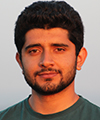
AHMAD Fawad
PhD Candidate
Computer Science,
University of Southern California
|
|
Date:
Time:
Venue:
|
|
9 February 2022, Wednesday
10:00am - 11:15am
This is a virtual seminar. Please register by 3 February 2022, the meeting link will be sent to those who have registered on the following day.
We look forward to seeing you at this research seminar.

|
|
About the Talk
A live digital twin is a high-fidelity 3D representation of a physical object. This digital representation continuously replicates the physical object in real-time. The speaker’s research vision is to build a live digital twin of the entire world. A live digital twin creates unprecedented capabilities for both computer and human consumption. It has the potential to improve safety and efficiency for autonomous driving, monitor on-going construction, and enable timely disaster relief operations etc. For humans, it means the possibility of digitally transporting to any place on the globe to live, interact and experience it in 3D like never before.
Novel capabilities enabled by live digital twins have strict performance and accuracy requirements. Achieving these requirements is impossible today for two reasons: limited wireless bandwidths, and limited on-board compute resources. The speaker will talk about how he have tackled these challenges in his research to build end-to-end systems that build live digital twins and consume them for safer and more reliable autonomous driving. He will also discuss how he plans to implement his vision for building a live digital twin of the world in future.
About the Speaker
Fawad Ahmad is a PhD candidate in the Computer Science Department at the University of Southern California. He received his undergraduate degree in Electrical Engineering from the University of Engineering and Technology, Peshawar (UETP) where he was the recipient of the Presidential Gold Medal. His research interests are in networks/systems, more specifically in mobile systems. During his Ph.D. he has interned at Microsoft Research and NEC Laboratories. He received the best paper runner-up award at MobiSys 2018. His work on autonomous vehicles was adopted by General Motors with two global patents. He was also the finalist for the Qualcomm Innovation Fellowship in 2019.
He is a tenure-track faculty candidate for Human-Machine Collaborative Systems, Multimedia cluster.
|