| |
Towards Scalable Game Learning and Solving
|
Speaker (s):
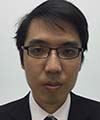
LING Chun Kai
PhD Candidate
Computer Science
Carnegie Mellon University
|
|
Date:
Time:
Venue:
|
|
7 March 2023, Tuesday
10:45am - 12:00pm
School of Computing & Information Systems 1 (SCIS 1), Level 4, Meeting Room 4-4
Singapore Management University
80 Stamford Road, Singapore 178902
Please register by 2 March 2023
We look forward to seeing you at this research seminar.

|
|
About the Talk
Game Theory underpins many exciting breakthroughs, ranging from superhuman performance in video and board games to societal applications such as airport security and wildlife poaching prevention. However, realizing the full potential of Game Theory requires overcoming two obstacles, (i) reasoning about games where game parameters are not available upfront, and (ii) efficiently solving large general-sum games seen in real-world applications. This talk will discuss three directions to address these challenges.
First, the speaker will introduce their differentiable game learning framework, the first end-to-end learning framework for learning game parameters using samples of players acting in equilibrium. Second, he will present a scalable game-solver based on subgame solving, giving the first online method for solving large general-sum games with performance guarantees. Third, he will show how learning the Enforceable Payoff Frontiers (EPF) — a generalization of state value that captures tradeoffs in utility between players — can help solve large games while maintaining theoretical performance guarantees.
About the Speaker
Chun Kai Ling is a final year PhD candidate at Carnegie Mellon University co-advised by Professors Zico Kolter and Fei Fang. His research interest is in machine learning for noncooperative games, with a focus on inverse game theory and scalable solvers for large general-sum games. He is the recipient of the 2018 IJCAI distinguished paper award. Prior to starting his PhD, he completed his undergraduate studies in the National University of Singapore and worked in DSO National Laboratories.
He is a tenure-track faculty candidate for the Artificial Intelligence & Data Science, Intelligent Systems & Optimisation.
|