Artificial Intelligence and data analytics has been extensively used in online learning, especially in the field of Mathematics and Computing Education through platforms such as Khan Academy and Data Camp. However, there is very little literature on the use of AI in open-ended learning. In this talk, I will explain the opportunities of Artificial Intelligence technologies such as chatbots and recommendation systems in formal and informal environments to encourage students to learn Science.
We will look at two case studies in this talk. In the first case study, the speaker will present a method of student and activity profiling based on competencies and using the generated competencies to design and recommend learning paths for students. For the second case study, she will present a modified AI chatbot that can be used for learning Science questions. For both applications, she will delve into the design and development of these systems, algorithms, and APIs employed as well as the impact and future work. After each case study, there will be a short discussion on the methods used and how the methods can be improved for better results.
About the Speaker
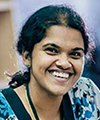
Kiruthika Ramanathan obtained her Bachelors and PhD in Engineering from the National University of Singapore. During her PhD thesis, she was working on ensemble methods for Supervised and Unsupervised Learning. Following this, she worked in the area of Brain-inspired cognitive systems with the Agency for Science, Technology and Research (A-STAR) for seven years, with a focus on algorithmic modelling of neural level learning and brain-inspired semantic representation.
Kiruthika also has more than 15 years of experience in Education with 7 years dedicated to community development and advocacy within the field of STEM education. As the Deputy Director of Education Programmes and Technology at Science Centre Singapore, she is currently also looking at merging technologies: Big Data, Artificial Intelligence, Augmented Reality and IoT, with a focus on technology enablement for education.
She is a lecturer-track faculty candidate.