| |
 | | | Deep Representation Learning for Time Series Forecasting | 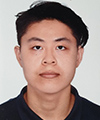 | Gerald WOO Jiale PhD Candidate
School of Computing and Information Systems
Singapore Management University
| Research Area Dissertation Committee Research Advisor Co-Research Advisor - Liu Cheng Hao, Senior Applied Scientist, Salesforce Research Asia
Dissertation Committee Member External Member - Min WU, Principal Scientist II, Institute for Infocomm Research, A*STAR
|
| | Date 12 August 2024 (Monday) | Time 2:30pm – 3:30pm | Venue Meeting room 4.4, Level 4
School of Computing and Information Systems 1,
Singapore Management University,
80 Stamford Road,
Singapore 178902 | Please register by 11 August 2024. We look forward to seeing you at this research seminar. 
|
|
|
| | ABOUT THE TALK Time series forecasting has critical applications across business and scientific domains, such as demand forecasting, capacity planning and management, and anomaly detection. Being able to predict the future yields immense value, allowing us to make downstream decisions with more confidence. Deep learning for time series forecasting is a burgeoning area of research, moving away from simple linear models found in classical time series analysis literature, towards more expressive, data hungry neural network architectures.
In this dissertation, we develop methods leveraging deep representation learning for time series forecasting, from exploring neural network architecture designs which encode inductive biases specific to time series data to scalable architectures which learn powerful representations from large-scale data. On the one hand, hand-crafting architectures with designs tailored to specific data modalities allows us learn representations which encode our priors. Such methods are efficient and less prone to overfitting on small to medium data. On the other hand, scalable architectures combined with large-scale data enable us to avoid manually specifying such priors which could potentially be incorrect. Instead, we learn representations purely from data with models with strong scaling capabilities.
This dissertation consists three broad themes. In the first part, we explore learning deep representations for time series data with seasonal-trend inductive biases. The second part delves into the concept of time-index models and how to adapt them for the deep learning setting. Finally, the third part of this dissertation pushes towards large-scale pre-training. Existing work in the academic domain rely on time series datasets with at most millions of observations. | | | ABOUT THE SPEAKER Gerald is a fourth year CS PhD candidate at Singapore Management University, advised by Assoc. Prof. Akshat Kumar. He is also very fortunate to be supported by the Salesforce Industrial Postgraduate Programme. At Salesforce AI Research Singapore, he is supervised by Chenghao Liu (Lead Applied Scientist). He did his undergraduate studies at Singapore University of Technology and Design, and Singapore Management University under the SUTD-SMU Dual Degree Programme in Technology and Management. He is interested in machine learning for time series forecasting, generative modelling, and deep learning. He has published several research papers on deep learning for time series forecasting at several conferences (ICLR, ICML). Outside of research, he enjoys reading, learning more about math and tech, eating good food, and exercising. |
|