| |
 |
|
|
Supporting Software Engineers with Large Language Model-Based Automation
|
|
|
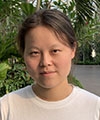
ZHANG Ting
PhD Candidate
School of Computing and Information Systems
Singapore Management University
|
| Research Area
Dissertation Committee
Research Advisor
Co-Research Advisor
Dissertation Committee Member
External Member
- Alexander Serebrenik, Professor, Department of Mathematics and Computer Science, Eindhoven University of Technology
|
|
|
| Date
13 December 2023 (Wednesday)
|
| Time
4:00pm – 5:00pm
|
| Venue
Meeting room 5.1, Level 5
School of Computing and Information Systems 1, Singapore Management University, 80 Stamford Road Singapore 178902
|
|
Please register by 12 December 2023.
We look forward to seeing you at this research seminar.

|
|
|
|
| About The Talk
In recent years, software engineering (SE) has witnessed significant growth, leading to the creation and sharing of an abundance of software artifacts such as source code, bug reports, and pull requests. Analyzing these artifacts is crucial for comprehending the sentiments of software developers and automating various SE tasks, ultimately leading to more human-centered automated SE and enhancing software development efficiency. However, the diverse and unstructured nature of software text poses a significant challenge to this analysis. In response, researchers have investigated a variety of approaches, including the utilization of natural language processing techniques. The advent of large language models (LLMs), ranging from smaller-size LLMs (sLLMs) like BERT to bigger ones (bLLMs) such as LLaMA, has ignited a growing interest in their potential for analyzing software-related text.
This dissertation explores how LLMs can automate different SE tasks involving classification, ranking, and generation tasks. In the first study, we assess the efficacy of sLLMs, such as BERT, in SE sentiment analysis, comparing them to existing SE-specific tools. Furthermore, we compare the performance of bLLMs with sLLMs in this context. In the second study, we address the issue of retrieving duplicate bug reports. First, we create a benchmark and then use bLLMs to enhance the accuracy of this process, with a specific focus on employing GPT-3.5 for suggesting duplicate bug reports. In the third study, we propose to leverage sLLMs to create precise and concise pull request titles.
In conclusion, this dissertation contributes to the SE field by exploring the potential of LLMs to support software developers in understanding sentiments and improving the efficiency of software development.
|
|
| Speaker Biography
Ting Zhang conducts research on software engineering. In particular, she is interested in automatic bug report management and leveraging large language models for automation to support software engineers.
Before joining SMU, Ting graduated with a Bachelor’s degree in Computer Science and Technology from Sun Yat-sen University, and a Master’s degree in Information Systems from Nanyang Technological University. She did an internship in Veracode in the summer of 2022. She enjoys doing sports and being a YouTuber in her leisure time.
|
|