| |
Collective Entity Linking in Tweets over Space and Time Speaker (s): 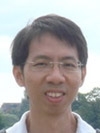
CHONG Wen Haw
PhD Candidate
School of Information Systems
Singapore Management University | Date:
Time:
Venue:
| | March 27, 2017, Monday
03:00 pm - 3:30 pm
Meeting Room 4.4, Level 4
School of Information Systems
Singapore Management University
80 Stamford Road
Singapore 178902
We look forward to seeing you at this research seminar. ![]()
|
|
About the Talk We propose collective entity linking over tweets that are close in space and time. This exploits the fact that events or geographical points of interest often result in related entities being mentioned in spatio-temporal proximity. Our approach directly applies to geocoded tweets. Where geocoded tweets are overly sparse among all tweets, we use a relaxed version of spatial proximity which utilizes both geocoded and non-geocoded tweets linked by common mentions. Entity linking is affected by noisy mention extraction and incomplete knowledge bases. In addition, much manual annotation of mentions is often required for evaluation. To mitigate these challenges, we propose comparison-based evaluation, which assesses the change in linking quality when one linking method modifies the output of another. With this evaluation we show that differences between collective linking and local linking, i.e. linking entities in each tweet individually, are statistically significant. In extensive experiments, collective linking consistently yields more positive changes to the linking quality, than negative changes. The ratio of positive to negative changes varies from 1.44 to 12, depending on the experiment settings. This a pre-conference talk for 39th European Conference on Information Retrieval (ECIR 2017). About the Speaker CHONG Wen Haw is a PhD student in School of Information Systems, Singapore Management University, working with Professor Ee-Peng Lim. He received his Bachelor of Engineering (Electrical), and Master of Science (Statistics) from the National University of Singapore in 2003 and 2007 respectively. His current research focuses on tweet geolocation and entity linking in tweets. |