| |
From Behaviour to Explanation: Actual Causality in Process Algebra Speaker: 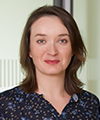
Georgiana Caltais
Assistant Professor
Formal Methods and Tools Group
University of Twente
Faculty of Electrical Engineering,
Mathematics and Computer Science (EEMCS)
| Date: Time: Venue: | | 21 July 2026, Tuesday 2:00pm – 3:00pm School of Economics/School of Computing & Information Systems 2 (SOE/SCIS 2)
Level 4, Meeting Room 4-1
Singapore Management University
Singapore 178903
Please register by 19 July 2026 
|
|
About the Talk Formal verification can tell us whether a system satisfies a property, but often not why this property holds. In this talk, I will discuss ongoing work on integrating actual causality into process algebra and concurrent-system semantics. We introduce the Causal Transition Calculus (CTC), a framework combining process algebra, modal logic, and intervention-based reasoning inspired by Halpern and Pearl. The framework allows us to reason about causes of behavioural properties in concurrent systems, while connecting variable-level interventions with operational semantics and labelled transition systems. A central insight is that causality depends not only on observable behaviour, but also on the internal structure generating that behaviour: systems that are behaviourally equivalent may still differ from a causal perspective. This work aims to build bridges between concurrency theory, formal verification, causal reasoning, and explainable system analysis, opening new directions for understanding complex reactive and distributed systems. About the Speaker Georgiana Caltais is an Assistant Professor in the Formal Methods and Tools group at the University of Twente, the Netherlands. She received her PhD from Radboud University and Reykjavík University and subsequently held research positions at ETH Zürich and the University of Konstanz.
Her research focuses on the formal modelling, semantics, and verification of concurrent systems. She works at the intersection of process algebra, modal logic, coalgebra, and operational semantics, with a particular interest in equivalence checking, and automated reasoning. Over the years, she has developed a sustained research line on causal and counterfactual reasoning for computational systems, investigating how formal methods can support explainability, debugging, and system analysis.
She has led and contributed to nationally and internationally funded research projects on causality, software-defined networks, software correctness, and intelligent diagnostics for complex cyber-physical systems. She has co-chaired several international conferences and workshops, including FSEN, EXPRESS/SOS, STAF, and the Dutch ICT.Open Software Engineering. Georgiana serves on the Steering Committee of SPIN, and is actively involved in the Dutch formal methods and software engineering communities through VERSEN and related initiatives. She regularly contributes to program committees of leading conferences in formal methods and software verification.
Her current work explores executable foundations for causal reasoning, combining ideas from process algebra, modal logic, and intervention-based causality. |