Do We Understand Education?
Speaker (s):
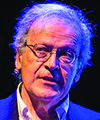
Leslie Valiant
T. Jefferson Coolidge Professor
Computer Science and Applied Mathematics
School of Engineering and Applied Science
Harvard University
| Date: Time: Venue: | | 8 January 2026, Thursday 10:00am – 11:00am School of Computing &
Information Systems 2 (SCIS 2)
Level 2, Seminar Room 2-6
Singapore Management University
90 Stamford Road
Singapore 178903
Please register by 7 January 2026 We look forward to seeing you at this research seminar. 
|
|
About the Talk
Formal education is a central part of human life and we invest enormous time and resources into it. Given this, do we invest enough resources into deriving a scientific understanding of the phenomenon of education itself? Here we discuss some issues that appear to be fundamental to education. For example, what evidence do we have that taking a course helps us in doing anything beyond knowing what is taught in that course? We go on to discuss a new perspective that puts our ability to be educated at the heart of who we are as a species. We discuss a notion of "educability" that seeks to define in computational terms the basic cognitive capability that separates humans from other living species. Since it is the ambition of AI to simulate human capabilities such a broader definition offers some goals for technology. In AI we have already seen that a computational approach to learning can give powerful systems such as Large Language Models. The question for technology is: what should we develop in the future?
About the Speaker
Leslie Valiant was educated at King's College, Cambridge; Imperial College, London; and at Warwick University where he received his Ph.D. in computer science in 1974. He is currently T. Jefferson Coolidge Professor of Computer Science and Applied Mathematics in the School of Engineering and Applied Sciences at Harvard University, where he has taught since 1982. Before coming to Harvard, he had taught at Carnegie Mellon University, Leeds University, and the University of Edinburgh.
His work has ranged over several areas of theoretical computer science, particularly complexity theory, learning, and parallel computation. He also has interests in computational neuroscience, evolution and artificial intelligence and is the author of three books, Circuits of the Mind, Probably Approximately Correct, and The Importance of Being Educable.
He received the Nevanlinna Prize at the International Congress of Mathematicians in 1986, the Knuth Award in 1997, the European Association for Theoretical Computer Science EATCS Award in 2008, and the 2010 A. M. Turing Award. He is a Fellow of the Royal Society (London) and a member of the National Academy of Sciences (USA).