| |

| Date: | 17 November 2023, Friday | Time: | 1:30pm to 3:15pm | Venue: | Seminar Room B1-1, Basement 1
School of Economics/School of Computing & Information Systems 2 |
|

Limited seating. Registration will close on 15 November 2023 or once maximum capacity is reached. Registration is required for attendance. Research Cluster: Artificial Intelligence & Data Science | | | Topic: | Quantifying Human Behaviors in Strategic Games
| Speaker: | CHENG Shih-Fen, Associate Professor of Computer Science
| Abstract: | In economics and artificial intelligence, researchers have long been intrigued by how human agents make decisions in strategic environments. In the literature, game-theoretic equilibrium is an ideal solution concept for strategic interaction among human agents, however, it is known to fail when agents have limited rationality. Behavioral game theory is an attempt to fix this, and the recent quantal cognitive hierarchy (QCH) model allows us to include both non-strategic and strategic agents with different levels of reasoning. The assumption of having a wide range of reasoning levels for agents allows researchers to more accurately describe the decisions made by human agents with bounded rationality. In this talk, I will introduce a learning-based method to further improve the QCH model by iteratively estimating the empirical distribution of agents' reasoning levels, which is shown to improve the current state-of-the-art results. |
|
| | Research Cluster: Human-Machine Collaborative Systems | | | Topic: | In-ear Microphone – Beyond Active Noise Cancellation
| Speaker: | MA Dong, Assistant Professor of Computer Science
| Abstract: | Nowadays, almost every young person owns a wireless earbud, which is typically equipped with a signature feature known as active noise cancellation (ANC). The key enabler of ANC is the integration of a microphone sensor in the ear canal, named in-ear microphone. In this talk, I will introduce, explain, and showcase a couple of novel sensing applications that can be enabled with the in-ear microphone, including human activity recognition, gesture recognition, physiological monitoring, user authentication, and etc. These applications extend to capability of earbuds beyond entertainment without hardware modification and offer a non-invasive way for human behaviour tracking and health monitoring. |
|
| | Research Cluster: Information Systems & Technology | | | Topic: | Towards Compact and Efficient Language Models of Code via Compression
| Speaker: | SHI Jieke, Research Engineer & PhD Candidate (Part-Time)
| Abstract: | Large language models of code have shown remarkable effectiveness in various software engineering tasks. Despite the availability of many cloud services built upon these powerful models, there remain several scenarios where developers cannot take full advantage of them, stemming from factors such as restricted or unreliable internet access, institutional privacy policies that prohibit external transmission of code to third-party vendors, and more. Therefore, developing compact, efficient, and yet energy-saving models for deployment on developers' devices becomes essential. This talk will present our endeavors in applying model compression techniques to craft compact models from large language models of code. By tailoring schemes to optimize model architectures and hyperparameter configurations, and training optimized models using knowledge distillation, we produce compact models with a mere size of 3 MB — 160 times smaller than the original large models of code. These models also significantly reduce energy consumption, carbon footprint, and inference latency by up to hundreds of times, with negligible impact on effectiveness (e.g., prediction accuracy on downstream tasks). |
| | | | | ABOUT THE SPEAKER(S) | | | |  | Shih-Fen Cheng is an Associate Professor of Computer Science at the Singapore Management University. He received his Ph.D. degree in industrial and operations engineering from the University of Michigan, Ann Arbor. His research focuses on the modeling and optimization of complex systems in engineering and business domains, with application in the areas of urban computing and human decision-making. He is particularly interested in the real-world impact of his research, as illustrated by his recent research on taxi and ride-hailing industry. His research outputs and deployed system have received prestigious international awards from CIKM, AAMAS, and INFORMS.
| | | |  | Dr. Dong Ma is currently an Assistant Professor at the HMCS cluster at Singapore Management University. His research interests rotate around cyber-physical systems, including pervasive sensing, mobile healthcare, and embedded machine learning, covering the end-to-end system design, implementation, and evaluation.
| | | |  | Mr. SHI Jieke is a PhD student and a Research Engineer at the School of Computing and Information Systems (SCIS), Singapore Management University (SMU). His research interests lie primarily in the intersection of Software Engineering (SE) and Artificial Intelligence (AI). Particularly, he focuses on (1) quality assurance of AI-enabled systems from an SE perspective, and (2) efficiency improvement of code models for real-world deployment. His work has been published in high-quality SE conferences such as ICSE, ASE, MSR, etc. He has won/been nominated for several research paper awards.
More info: https://jiekeshi.github.io. |
| | | SEMINAR MODERATOR | | | 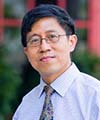 | NGO Chong Wah
Professor of Computer Science
Director, Human-Machine Collaborative Systems Cluster |
|
|
|
|