| |
 | | Date: | 12 September 2025, Friday
| | Time: | 3:45pm to 4:45pm
| | Venue: | School of Computing & Information Systems 1 (SCIS1), Level 2, Seminar Room 2-4, Singapore Management University, 80 Stamford Road, Singapore 178902 |
|
|

Limited seating. Registration will close on 4 September 2025 or once maximum capacity is reached. Registration is required for attendance. Light refreshment will be provided after the talks. | Research Cluster: Artificial Intelligence & Data Science | | | | Topic: | Learning to Solve Vehicle Routing Problems | | Speaker: | CAO Zhiguang, Assistant Professor of Computer Science;
Lee Kong Chian Fellow | | Abstract: | The Vehicle Routing Problem (VRP) is a fundamental NP-hard combinatorial optimization problem at the core of logistics and intelligent transportation. Traditionally, it has been tackled using exact solvers or carefully designed heuristics. In this talk, I will present how deep learning, particularly Transformer-based models, provides new perspectives for solving VRPs through two distinct paradigms. I will then highlight recent advances in leveraging LLMs to address VRPs. |
|
| | | Research Cluster: Human-Machine Collaborative Systems | | | | Topic: | AI That Sees the Future: Multimodal LLMs for Open-World Forecasting | | Speaker: | MA Yunshan, Assistant Professor of Computer Science | | Abstract: | Forecasting future events is one of humanity’s oldest aspirations, and one of AI’s grand challenges. Traditional forecasting methods often rely on narrow, unimodal data sources such as time-series or text, and are restricted to predefined event categories. Yet the real world is multimodal and open-ended: social unrest is shaped by news, images, and online signals; climate disasters involve environmental indicators, satellite imagery, and community responses; financial markets intertwine with global narratives and local events. These complexities make forecasting both technically demanding and societally critical
Recent advances point toward a paradigm shift. Conventional time-series and text-based forecasting models are giving way to multimodal approaches that combine heterogeneous signals, such as text with time-series in finance, text with images in geopolitical forecasting, or text with graphs for modelling event relations. The emergence of large language models (LLMs) further accelerates this transformation. With their multimodal understanding, reasoning capabilities, and embedded domain knowledge, LLMs hold the promise of enabling open-world forecasting systems that can flexibly anticipate diverse types of future events. This talk will introduce these trends and challenges, and illustrate them through my research in domains such as geopolitics, finance, cybersecurity, and fashion trend. |
|
| | | Research Cluster: Information Systems & Technology | | | | Topic: | Brain Mapping of Flow Experience: Evidence of a High-Dimensional Metastable Dynamic Neural System | | Speaker: | Fiona NAH, Professor of Information Systems | | Abstract: | The flow state, which is characterized by deep immersion and focused concentration, has been widely studied in human behavioral research. However, the dynamic neural mechanisms underlying the flow experience remain poorly understood. We conducted a within-subjects lab experiment and used a 64-channel electroencephalogram (EEG) system for data collection to study the neural dynamics of the flow state. We compared the flow state with the boredom and anxiety states of subjects. The results indicate that the flow state is characterized by high metastability and dimensionality in brain connectivity compared to the flow and boredom states. This study advances the theoretical understanding of the flow state from the perspective of a dynamic neural system, providing valuable insights for future research on induction of the flow state and design of adaptive systems. |
| | | | | | ABOUT THE SPEAKER(S) | 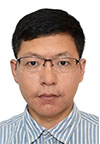 | Dr. CAO Zhiguang is an Assistant Professor at the School of Computing and Information Systems, SMU. Previously, he was a Research Scientist at A*STAR and a Research Assistant Professor at NUS. His research lies at the intersection of machine learning and optimization, with a focus on learning to optimize. In particular, he develops deep learning (including LLM)-based methods as alternatives to traditional approaches for solving combinatorial optimization problems, such as vehicle routing and scheduling. | | | |  | Dr. Yunshan MA is a tenure-track assistant professor in School of Computing and Information Systems, Singapore Management University. He received his PhD degree from the School of Computing, National University of Singapore, in 2022. His research interests include multimodal event forecasting, bundle recommendation, and the associated applications in vertical domains of finance, fashion, and cyber security, etc. His works have appeared in top-tier conferences such as ACMMM, SIGIR, KDD and WWW, and top-tier journals such as TKDE and TOIS. He received the Best Student Paper Award in ACM ICMR 2021, Outstanding Paper Award in ICLR 2025.
| | | |  | Dr. Fiona NAH is a Professor of Information Systems at the School of Computing and Information Systems at SMU. Recognized among the world’s top 2% most-cited scientists in a Stanford University study, she is also a Fellow of the Association for Information Systems (AIS), a recipient of the Top 50 Asia Women Tech Leaders Award in 2024, and the Editor-in-Chief of the AIS Transactions on Human-Computer Interaction. Dr. Nah earned her Ph.D. from the University of British Columbia and received her B.Sc. (Hons) and M.Sc. in Computer and Information Sciences from the National University of Singapore. Prior to joining SMU, she held faculty positions at Purdue University, University of Nebraska–Lincoln, Missouri University of Science and Technology (formerly the University of Missouri–Rolla), and City University of Hong Kong. She has garnered more than 17,500 citations on Google Scholar and has received research funding from the United States National Science Foundation, Hong Kong Research Grants Council, and IBM. | | | | | | | | SEMINAR MODERATOR | | | |  | TAN Ah Hwee
Lee Kong Chian Professor of Computer Science;
Associate Dean (Research)
|
|
|
|
|