SCIS Seminar by Dr. Tarek Abdelzaher, Dr. Soujanya Poria, Dr. Lin Shao & Dr. Archan Misra | | | DATE : | 17 September 2025, Wednesday | | TIME : | 3:00pm to 5:30pm | | VENUE : | School of Economics/School of Computing & Information Systems 2 (SOE/SCIS 2) Level 2,
Seminar Room 2-6
Singapore Management University,
Singapore 178903 |
| 
|
| | Please register by 16 September 2025. We look forward to seeing you at this research seminar.
| | | About the Talk (s) Talk #1: Edge AI Services and Foundation Models for Internet of Things Applications
Speaker: Dr. Tarek Abdelzaher, Professor, Department of Computer Science, University of Illinois at Urbana-Champaign | Advances in self-supervised AI revolutionized modern machine intelligence, but important challenges remain when applying these solutions in IoT contexts - specifically, on lower-end distributed embedded devices with multimodal specialized sensors, where ample training data are not readily available. The talk discusses challenges in offering self-supervised machine intelligence services to support distributed embedded sensing applications. The intersection of IoT applications, real-time requirements, distribution challenges, and self-supervised AI motivates several important research directions. For example, how to adapt self-supervised training pipelines to the embedded sensing domain? Can one develop foundation models for IoT that offer extended inference capabilities from multimodal time-series data? How to endow these models with an understanding of space (and spatial signal propagation) in order for them to reconstruct the state of the physical environment from multiple distributed sensor observations? How to overcome the challenge of data scarcity when it comes to training such AI models with specialized sensor data that are not as widely available as text and images? The talk addresses the above questions and presents initial empirical results on using the answers to train small foundation models for embedded sensor data. | Talk #2: Generative Planning and Contact Synthesis for General-Purpose Robotic Manipulation
Speaker: Dr. Lin Shao, Assistant Professor, Department of Computer Science at the School of Computing, National University of Singapore | With the recent success of foundation models, an important research direction is to develop a foundation model that can generalize across tasks, objects, and robot embodiments, enabling robots to adapt and operate effectively in unstructured environments.
In this talk, I will present two of our recent methods that address complementary challenges in this pursuit: high-level generative planning and low-level contact synthesis. First, I will introduce FLIP, a flow-centric generative planning framework. FLIP generates long-horizon task plans from an initial image and natural language instructions, thereby supporting general-purpose manipulation planning. By representing actions as 'flows,' FLIP not only enables planning across diverse objects, robots, and tasks, but also provides rich guidance for long-horizon video generation. Next, I will present our contact synthesis model, which formulates manipulation as a contact synthesis problem to address the significant variability across objects, robots, and tasks. The model takes as input point cloud data of objects and robot arms, object physical properties, target motion, and a mask of the manipulation region. It outputs contact points on the object along with the corresponding contact forces or post-contact motion trajectories, enabling robots to execute the required manipulation tasks. I will conclude by discussing future directions for advancing general-purpose robotic intelligence. | Talk #3: 10 Open Challenges Steering the Future of Vision-Language-Action Models
Speaker: Dr. Soujanya Poria, Associate Professor, School of Electrical and Electronic Engineering, National Technological University | Vision-language-action (VLA) models are quickly becoming central to embodied AI, building on the breakthroughs of large language models and vision-language models. Their promise lies in something simple yet profound: the ability to follow natural language instructions and turn them into real-world actions. In this talk, I’ll walk through ten milestones that mark the progress and challenges ahead for VLA models—ranging from multimodality and reasoning to data, evaluation, generalization across robots, efficiency, whole-body coordination, safety, intelligent agents, and human collaboration. Each of these represents both a technical challenge and a stepping stone toward truly capable embodied systems. I’ll also highlight emerging trends that are shaping the future: spatial understanding, modeling world dynamics, post-training refinements, and synthetic data generation. Together, these directions point to a roadmap for accelerating VLA models toward real-world deployment and broader societal impact. My goal is to spark discussion on how we, as a community, can shape this exciting trajectory—and bring VLA models from promising prototypes to widely adopted, trustworthy, and useful embodied intelligence. | Talk #4: Efficient, Embodied AI for Collaborative Human-Machine Tasking
Speaker: Dr. Archan Misra, Vice Provost (Research) and Lee Kong Chian Professor of Computer Science, Singapore Management University | Advances in machine intelligence capabilities for perception, decision making and navigation will allow robots to be used, beyond traditional manufacturing assembly lines, as co-workers in environments such as homes, shopping malls and industrial sites. However, current embodied AI models are simply too large and complex to permit on-device execution on resource-constrained pervasive platforms. Through this talk, I shall introduce a few key research directions that aim to reduce the sensing and computational overheads for a couple of canonical embodied AI tasks, such as 2D/3D visual grounding of human instructions and robotic task planning in dynamic environments. |
| | | About the Speaker (s) 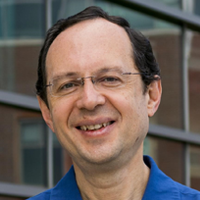 | | Tarek Abdelzaher received his Ph.D. in Computer Science from the University of Michigan in 1999. He is currently a Sohaib and Sara Abbasi Professor and Willett Faculty Scholar at the Department of Computer Science, the University of Illinois at Urbana Champaign. He has authored/coauthored more than 300 refereed publications in edge AI, IoT, real-time computing, sensor networks, and control. He served as an Editor-in-Chief of the Journal of Real-Time Systems, and has served as Associate Editor of the IEEE Transactions on Mobile Computing, IEEE Transactions on Parallel and Distributed Systems, IEEE Embedded Systems Letters, the ACM Transaction on Sensor Networks, and the Ad Hoc Networks Journal, among others. Abdelzaher's research interests lie broadly in understanding and influencing performance and temporal properties of networked embedded, social and software systems in the face of increasing complexity, distribution, and degree of interaction with an external physical environment. Tarek Abdelzaher is a recipient of the IEEE Outstanding Technical Achievement and Leadership Award in Real-time Systems (2012), the Xerox Award for Faculty Research (2011), as well as over a dozen best paper awards. He is a fellow of IEEE and ACM. | | |  | | Lin Shao is an Assistant Professor in the Department of Computer Science at the School of Computing, National University of Singapore (NUS), where he leads the Robot Learning and Intelligent Systems Lab (LinS Lab). His lab’s long-term goal is to build general-purpose intelligent robotic systems capable of performing diverse tasks across different environments in the physical world, with a focus on developing algorithms and systems that empower robots with perception and manipulation capabilities. He serves as Co-Chair of the IEEE RAS Technical Committee on Robot Learning and as an Associate Editor for IEEE Transactions on Robotics (T-RO) and IEEE Robotics and Automation Letters (RA-L). He is also an Associate Editor for the International Conference on Robotics and Automation (ICRA). He has received multiple international conference awards and finalists, including: Best System Paper Award Finalist at RSS 2023, Best Paper Award and Best Student Paper Award finalists at ICRA 2025, and the Best Paper Award in Manipulation and Locomotion at ICRA 2025. Previously, he obtained his Ph.D. at Stanford University under the supervision of Jeannette Bohg, with Leonidas J. Guibas as his co-advisor. | | | 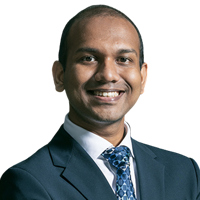 | | Soujanya Poria is an Associate Professor at the School of Electrical and Electronic Engineering at Nanyang Technological University (NTU). Before that, he was an Associate Professor at Singapore University of Technology and Design and a senior scientist at A*STAR. He holds a Ph.D. degree in Computer Science from the University of Stirling, UK. Dr. Poria’s scholarly contributions include over 150 published papers in well-regarded conferences and journals. He has garnered substantial attention in the academic community, accumulating more than 40,000 citations on Google Scholar. His research has attracted funding from both governmental and industrial sources, and his achievements have been acknowledged through awards like the Social Impact Award at NAACL 2024, the IEEE CIM Outstanding Paper Award, and the ACM ICMI Best Paper Award Honorable Mention. Dr. Poria has taken on significant responsibilities in various conferences and workshops, including roles as area co-chair in several ACL, NAACL, NeuRIPS, and EMNLP conferences. He has also served as a workshop co-chair at AACL 2022. His expertise has been recognized globally, leading to invitations for keynote presentations at notable events such as CICLing 2018, SocialNLP2019, MICAI 2020, and ICON 2020. Dr. Poria serves as an associate editor for reputable publications, including Cognitive Computation, Information Fusion, IEEE Transactions on Big Data, and Neurocomputing. In 2018, he was honored with the prestigious NTU Presidential Postdoctoral Fellowship. He was named one of the recipients of the IEEE’s “10 to Watch in AI” award in 2022. In addition to this recognition, Dr. Poria has received other esteemed awards, including the President’s Young Scientist Award in 2023, MIT TR35 Innovator under 35 Asia Pacific, the IEEE CIS Outstanding Early Career Award in 2024, and the Aminer AI2000 Most Influential Scholar Honorable Mention Award in 2023 and 2024. | | | 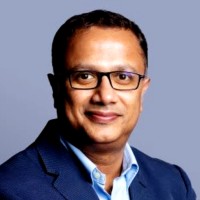 | | Archan Misra is Vice Provost (Research) and Lee Kong Chian Professor of Computer Science at Singapore Management University (SMU). Over the past decade, Archan has provided leadership to a number of large-scale research initiatives at SMU, cumulatively worth more than $50M USD, which collectively developed innovative mobile/wearable/IoT technologies for pervasive computing applications. He is currently a Program Co-PI on the ongoing Mens, Manus and Machina (M3S) inter-disciplinary research program, established by MIT’s SMART research enterprise in Singapore, that seeks to create breakthroughs on the use of AI and machines for collaborative work with humans. His current research interests lie in ultra-low energy execution of AI on IoT and edge devices, and embodied AI to support spatially grounded human-machine collaboration. An ACM Distinguished Member, Archan chaired the IEEE Computer Society's Technical Committee on Computer Communications (TCCC) from 2005-2007. | | |
| |
|